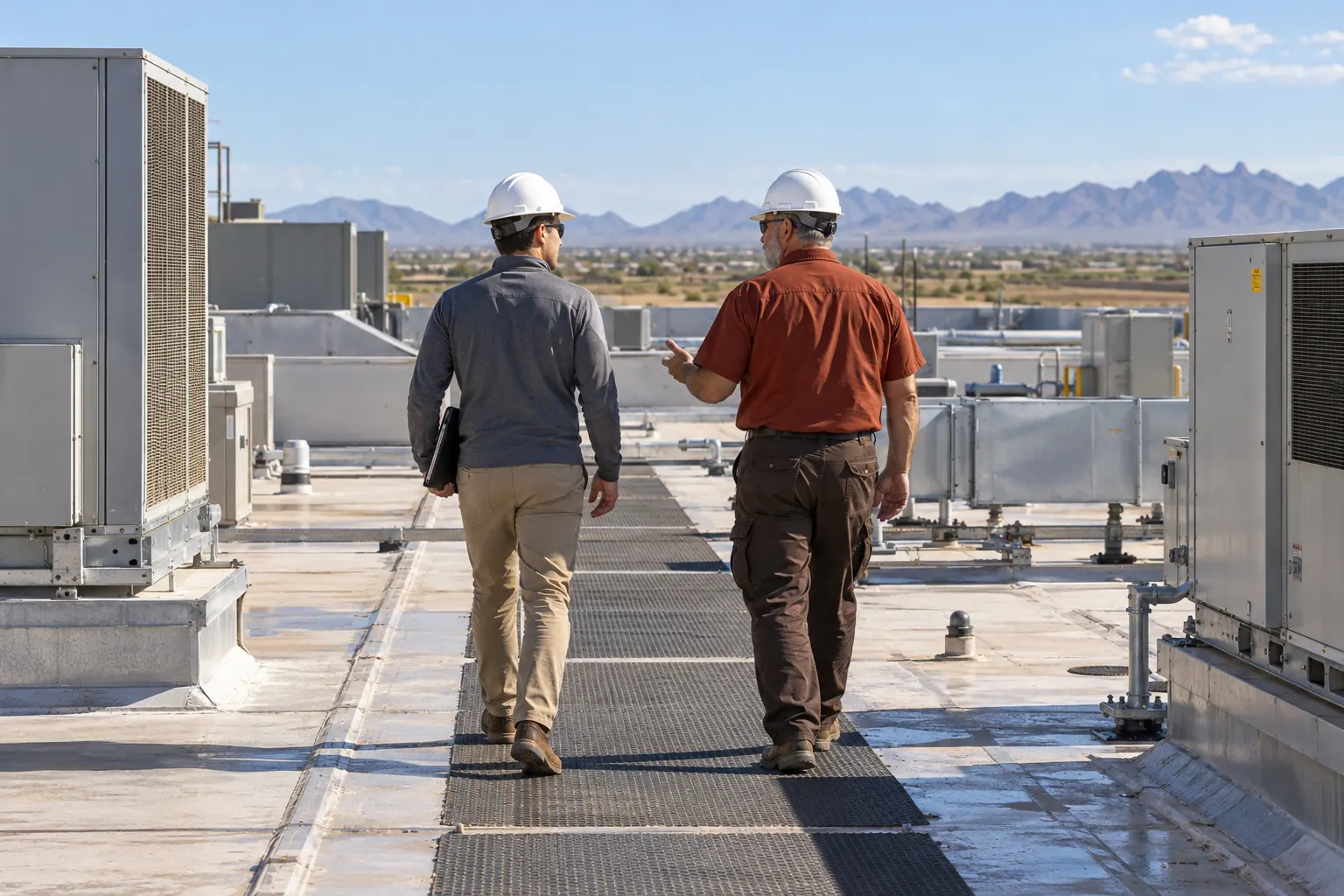
Industrial Roof Repair
Metal roofs over plants and shops often carry exhaust fans and vents, so industrial roof repair plans work zones around running equipment.
Industrial roof repair
We handle commercial metal roof repair on Casa Grande shops, warehouses, and farm buildings, replacing loose fasteners, resealing panel laps, and treating rust before it eats through.
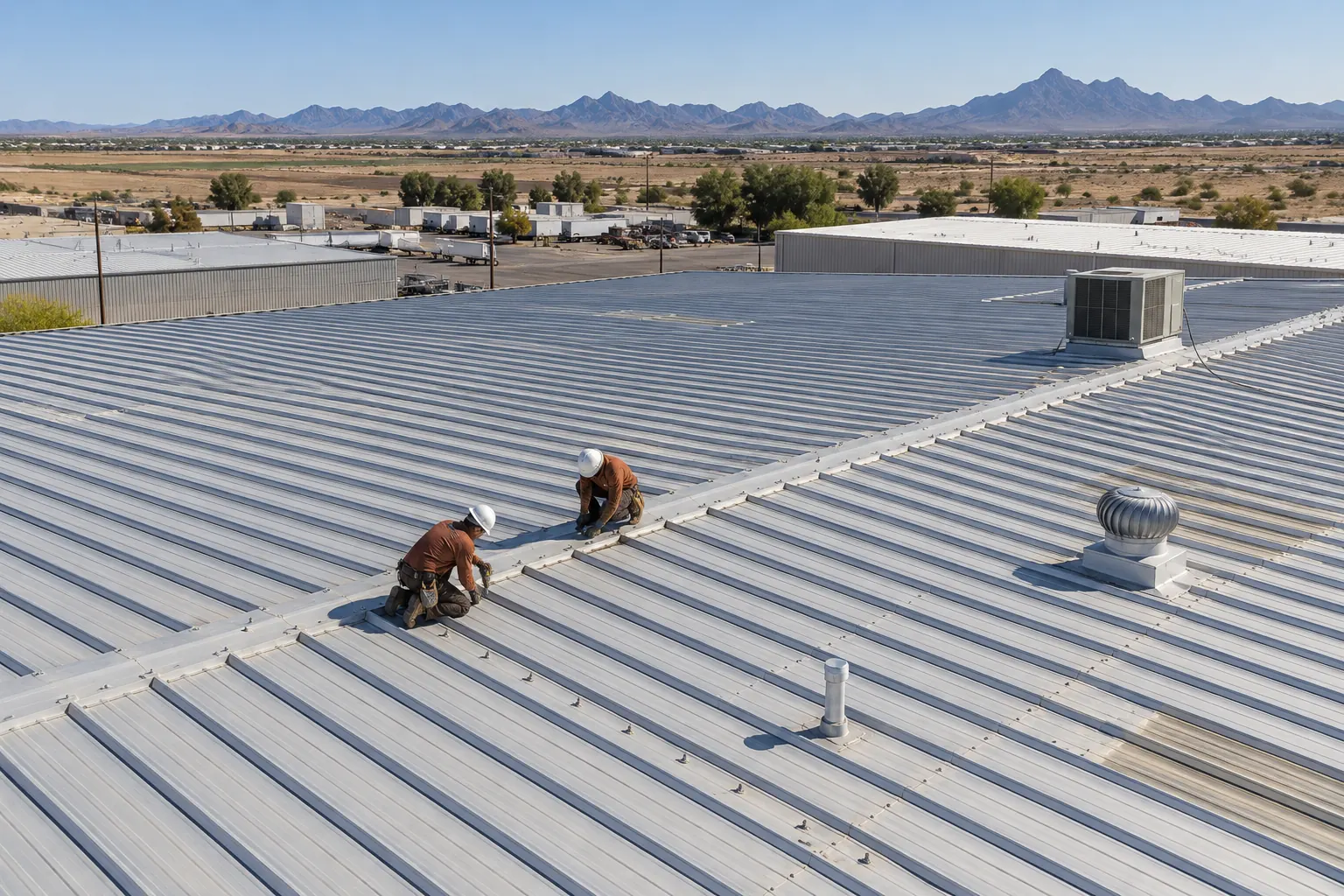
Metal roofs take repair well while the panels themselves are solid. Rust that has gone through the steel changes the answer.
Water gets into a metal roof at fasteners, laps, and anything cut into the panels.
Each screw seals with a rubber washer. Daily expansion in the heat loosens screws, and the dried washer cracks and lets water follow the shank.
Where one panel overlaps the next downslope, sealant shrinks and water wicks back under the upper panel during heavy rain.
The ridge cap and its foam closures cover the top of every panel run. Lifted caps let wind-driven rain blow straight in.
Translucent panels yellow and crack in the sun, and their fasteners and lap sealant fail sooner than the steel around them.
Units and vents set through panels need curbs or flexible boots. Rust and gaps at these openings are common leak points.
Rust starts along the eave where water and dust collect, and gutters pulled loose by wind stop carrying water off the roof.
Most metal repairs fall into four types, chosen by what failed and how far the damage reaches.
| Repair | What It Fixes | When It Is Enough |
|---|---|---|
| Fastener replacement | Backed-out screws and cracked washers | Holes are still tight enough for an oversized screw |
| Lap resealing | Shrunk sealant at end and side laps | Panels at the lap are solid steel |
| Rust treatment and coating | Surface rust bloom at fasteners and laps | Rust stays on the surface of the panel |
| Panel or skylight swap | Holes, splits, or yellowed skylight panels | Damage is limited to a few panels |
Four repairs handle most metal roof leaks on Casa Grande shops and warehouses.
Heat swings work screws loose, and water runs down the shank past the dried washer.
Each loose screw is replaced with an oversized fastener and a new washer that seals the enlarged hole.
Old sealant at end laps shrinks into a thin bead that leaves a gap between panels.
Laps are cleaned, fresh sealant tape goes in, and stitch screws pull the panels tight again.
Orange bloom spreads out from fasteners and laps where water and dust sit after storms.
Rust is wire-brushed back to firm steel, primed, and coated before it eats through the panel.
Translucent panels turn yellow and brittle, then crack around their fasteners.
Cracked panels come out and matching profiles go in, with new sealant at the laps on both sides.
Surface rust caught early stays a repair. Call and describe where the orange shows up: fastener lines, laps, or along the eave.
Metal repairs follow the panel runs, from the ridge down to the eave.
We walk the panel runs, check every fastener line near the leak, look under the ridge cap, and note rust, loose laps, and damaged skylight panels.
On The Roof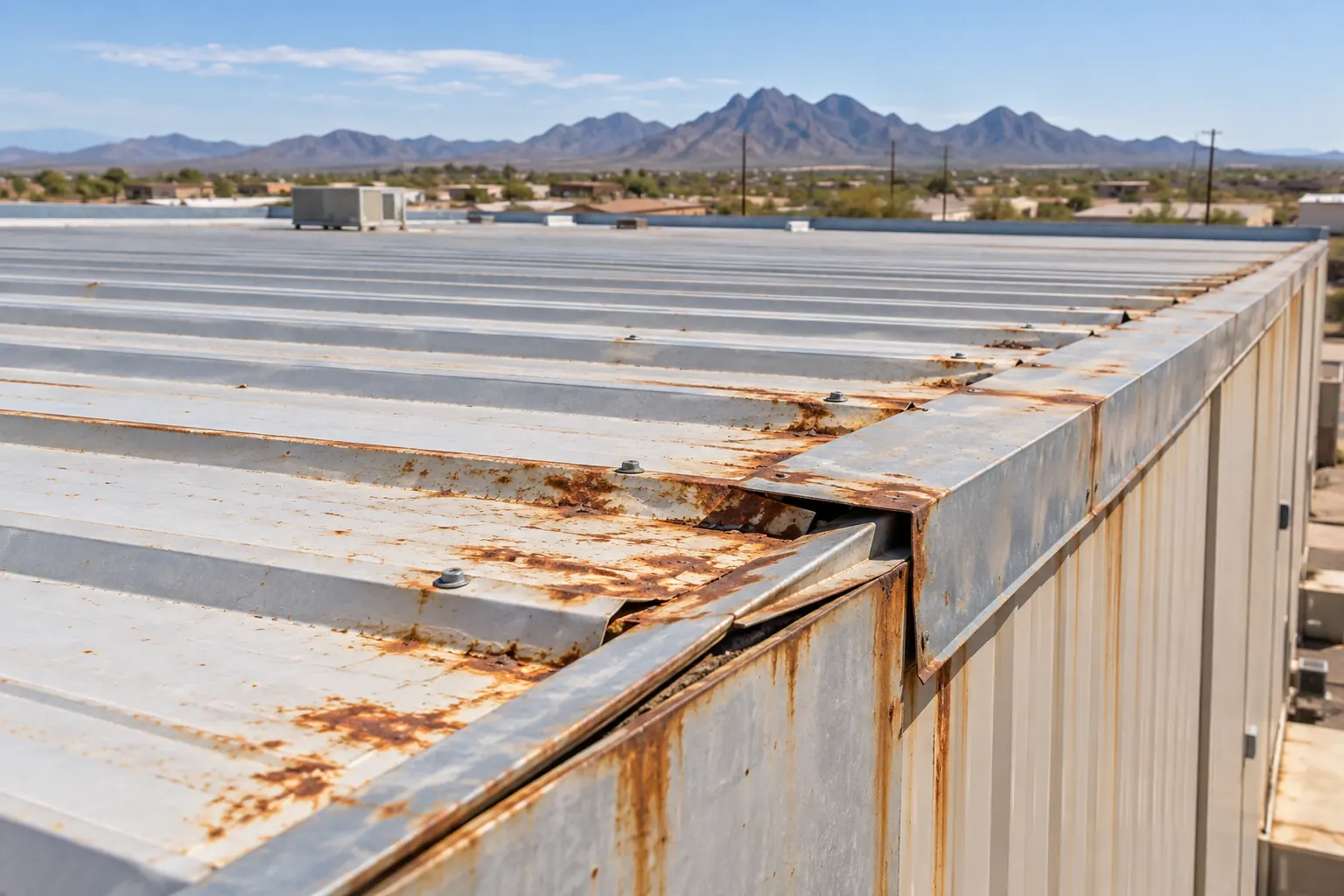
Roofers move along the purlin lines, where panels are supported, and use fall protection on pitched roofs. Fragile skylight panels get marked or covered first.
At The Building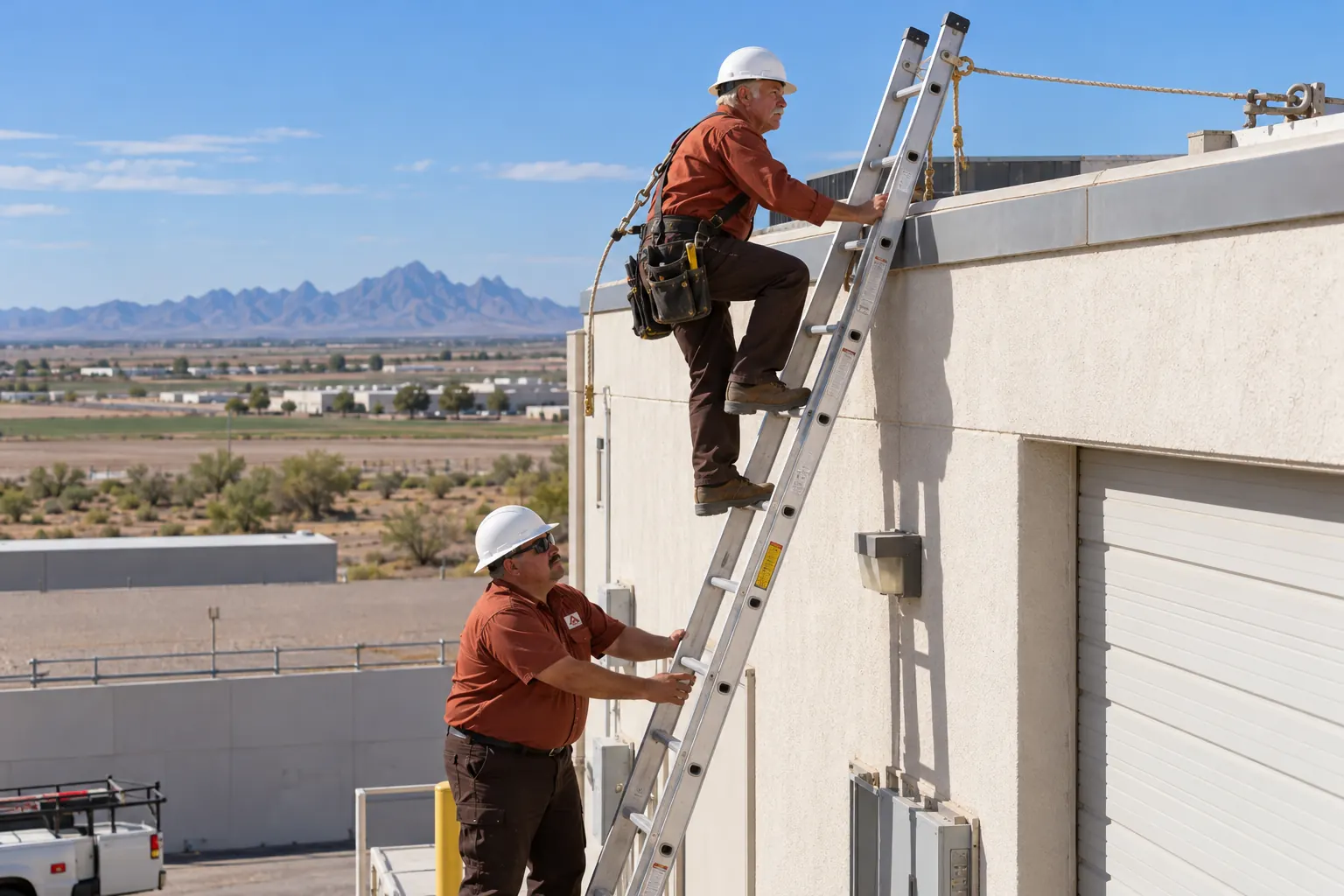
Loose and stripped screws are pulled and replaced with oversized fasteners and new washers, working up each line around the leak.
On The RoofLaps are cleaned and resealed, stitch screws pull them tight, and rust bloom is brushed, primed, and coated.
On The RoofYou get photos of the repaired fastener lines and laps, plus a note on any panels or skylights that should be replaced later.
PaperworkTwo other services often come up on metal buildings.
Metal roofs over plants and shops often carry exhaust fans and vents, so industrial roof repair plans work zones around running equipment.
Industrial roof repair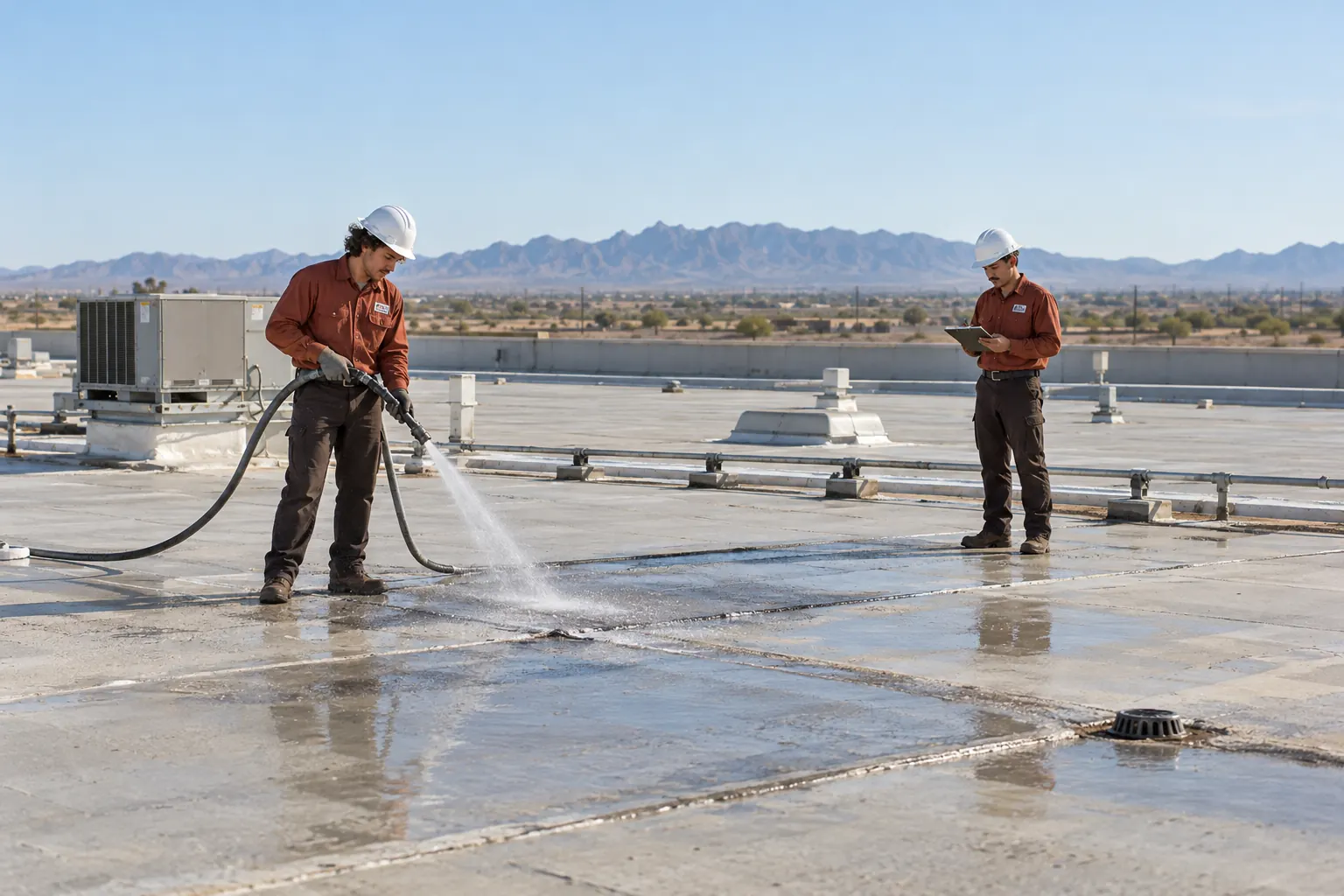
When water shows up far from any rusted fastener, controlled water tests at single laps find the real entry point before panels are touched.
Commercial roof leak repairWhat owners of metal shops and warehouses ask about repairs.
Fasteners and laps, well before the panels themselves. On shops, warehouses, and farm buildings here, daily expansion works screws loose and cracks the rubber washers under them, lap sealant shrinks, rust blooms where water sits, and skylight panels yellow and crack. Each of those gets its own repair, from oversized screws to resealed laps and swapped skylights.
Yes. Standing-seam panels hide their fasteners in clips under the seams, so leaks usually come from end laps, ridge closures, curbs, or a seam that has been bent open. Repairs reseal or re-crimp the seam and rebuild the flashing at those details.
Often, when the leak sits on a fastener line. Oversized screws with fresh washers seal enlarged holes, though a leak at a lap, ridge, or skylight needs work at that detail too. The water test during the inspection shows which one is responsible.
It looks similar from below but has a different cause. Warm, moist air inside a metal building condenses on the cold underside of the panels and drips. A leak follows rain; condensation shows up on cool nights and mornings, even in dry weather, and calls for insulation or ventilation changes.
Common profiles are still made, so replacement panels and skylights can usually be matched by measuring rib height and spacing. When a profile is out of production, a close match or a formed patch panel covers the damaged area and is lapped and sealed into the run.
A coating helps once the repairs are done. After fasteners are replaced, laps sealed, and rust primed, a coating system made for metal covers the surface and seals the fastener heads. The panels need to be solid and clean first, since coating over active rust or loose laps fails early.
Gusts lift loose ridge caps, trim, and gutters first, then any panel with failed fasteners at the eave. After a storm, look from the ground for flapping trim, bent edges, and screws lying on the roof, and keep people off the panels until a roofer checks them.
Tell us the panel type, if you know it, and where the rust or drips show up, and we will plan the inspection.