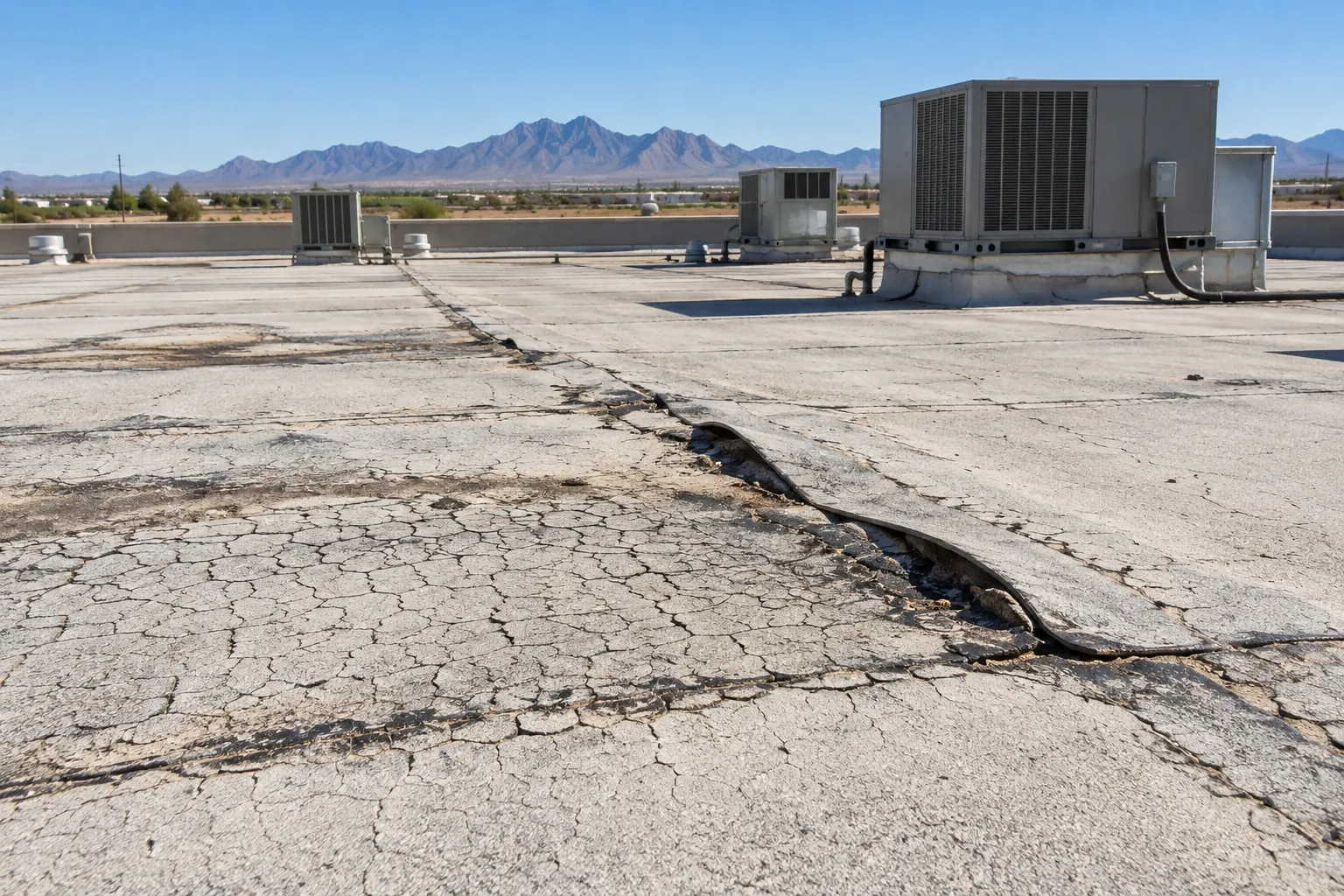
Flat Roof Repair
Most traced leaks end at a flat roof detail, so flat roof repair takes over once the failed lap, drain, or flashing is found.
Flat roof repair in Casa Grande
We find and fix commercial roof leaks in Casa Grande by tracing water from the stain inside back to the seam, flashing, or fastener that let it in.
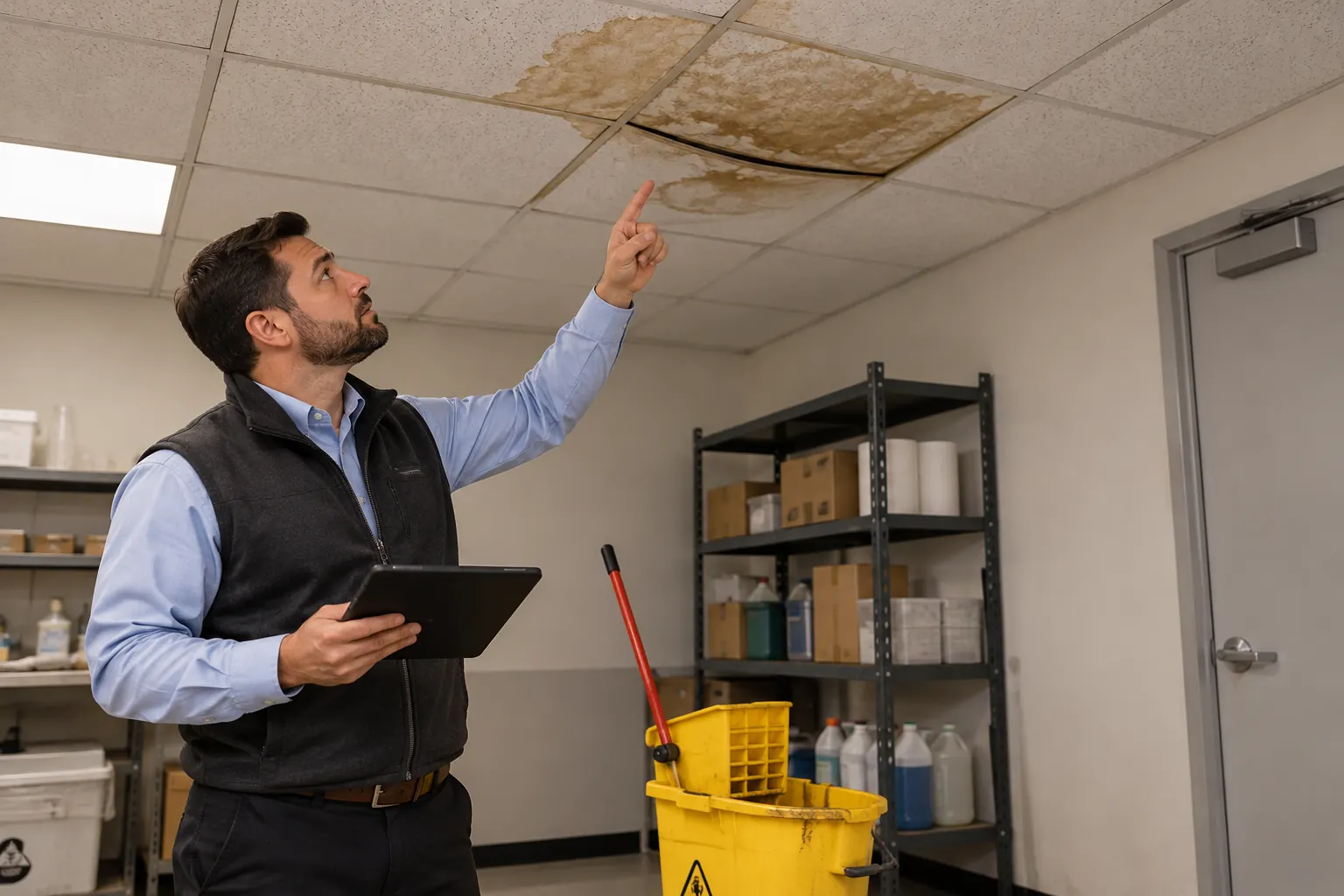
Most leaks have one entry point. A few signs mean water has spread far enough that the repair needs to cover a larger area.
The drip you see inside is usually downhill of the real entry point. The plan follows one leak from entry to stain.
Water gets in at a failed lap, a split curb corner, or an open pipe boot, often far upslope of the drip inside.
Under the membrane it runs across the top of the insulation board, soaking the board as it goes.
On a steel deck it drops into a flute and runs along it until it reaches a seam or fastener hole in the deck.
It finally drips through a ceiling tile, light fixture, or sprinkler line, which is where the bucket ends up.
Testing one suspect detail at a time, with dry pauses between, shows which detail produces the drip below.
Leak work combines a fix at the entry point with whatever the water has damaged on its way inside.
| Repair | What It Fixes | When It Is Enough |
|---|---|---|
| Temporary leak control | Water coming through now | Holds until the surface dries for a lasting repair |
| Single-detail repair | One failed lap, boot, curb, or drain | The water test points to one entry |
| Wet-area cut-out | Soaked insulation around the entry point | The wet area has clear edges |
| Interior protection | Stock, desks, or equipment under the drip | Set up before any repair opens the roof |
A leak repair is finished when the entry point is fixed and the wet material around it is gone.
The same tile stains after every storm because earlier repairs sealed the spot above the stain instead of the entry point.
Tracing upslope finds the real entry, and the repair goes there, so the stain below stops coming back.
Water trapped under the membrane keeps spreading through the insulation long after the rain ends.
Wet board around the entry point is cut out and replaced, so the roof dries out and the leak has no wet path left to follow.
Tape or mastic set during a storm breaks down fast on a hot roof and starts leaking again.
The stopgap comes off and a permanent repair goes in once the surface is dry enough to bond.
Condensate, curb flashing, and the unit cabinet can all drip into the same ceiling area below.
Each source is checked separately, and the curb flashing or condensate line at fault gets repaired.
Move what you can, catch the water, and call. Describe where it drips and what sits on the roof above, and we will plan the first steps.
Leak work starts inside the building and ends on the roof at the detail that failed.
We start under the stain, measure its position from walls and columns, then go up and check every lap, curb, pipe boot, and drain upslope of that spot.
At The Building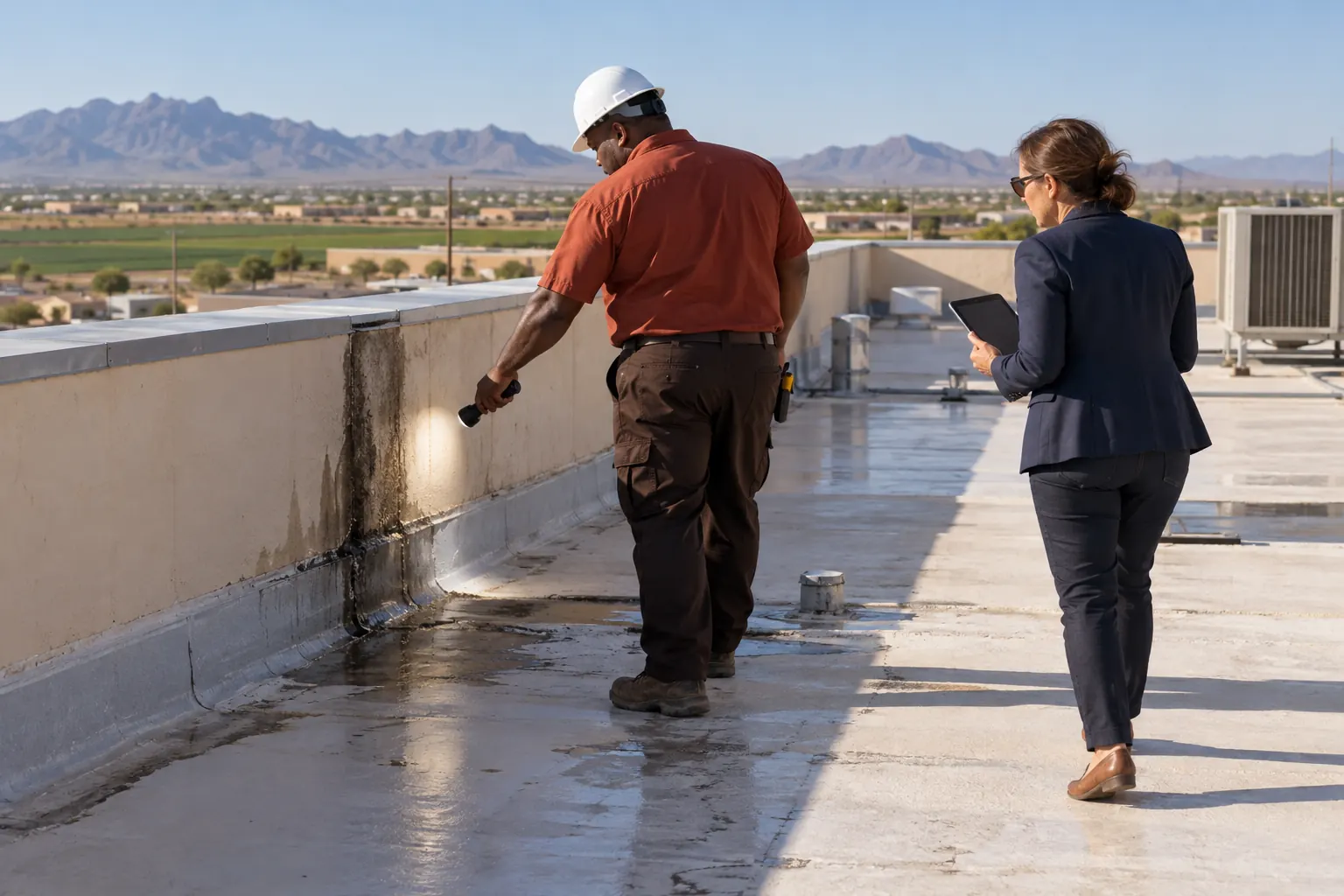
Water goes on one suspect detail at a time while someone watches the ceiling below. Dry pauses between tests keep the results clear.
On The Roof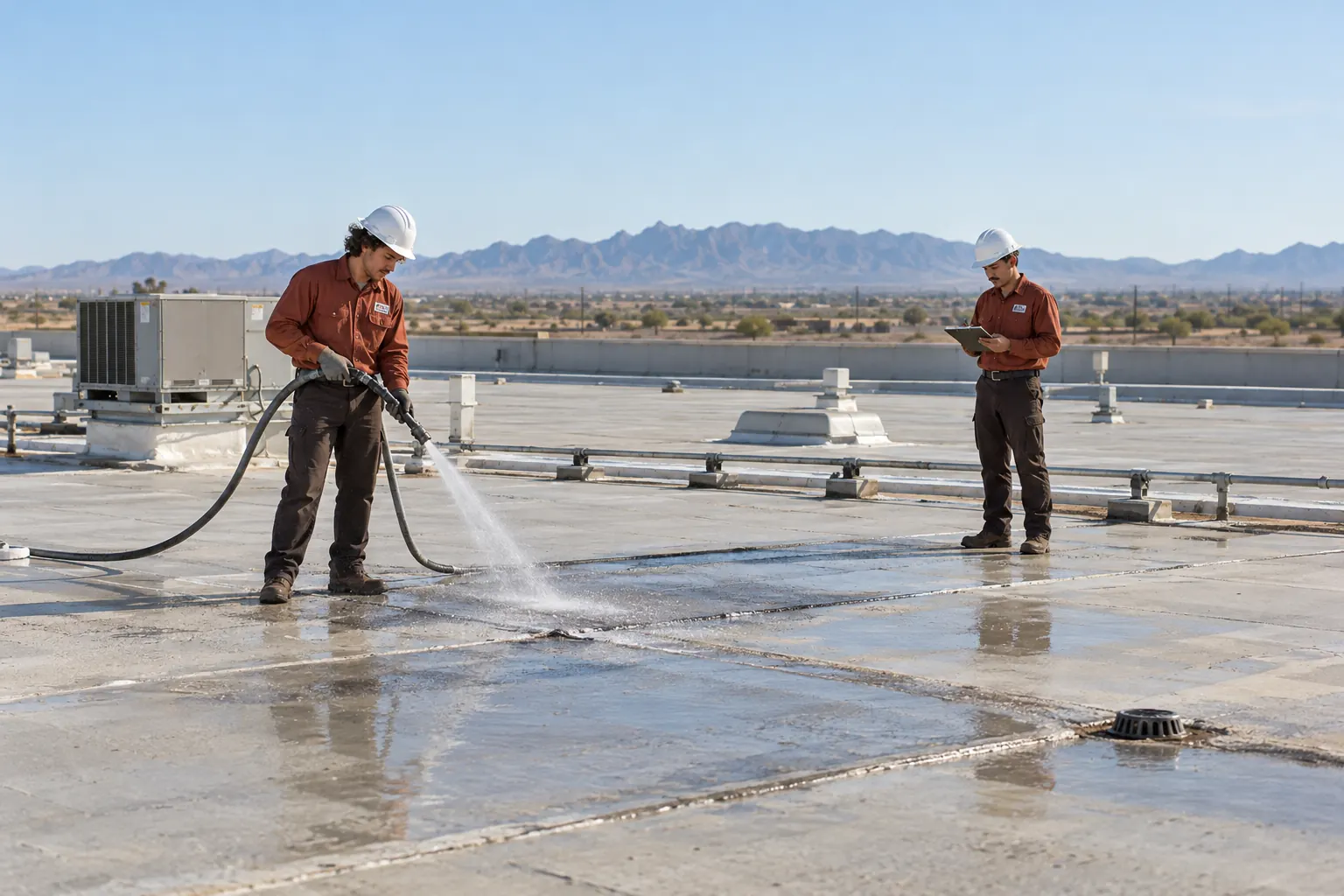
If the roof is leaking now, compatible tape, a patch, or a cleared drain holds until the surface dries. Receipts for that stopgap work are kept for your records.
On The RoofThe failed detail gets a permanent repair, and wet insulation around it is cut out and replaced so water stops spreading under the membrane.
On The RoofPhotos of the entry point and the repair come to you, and the ceiling under it gets watched after the next storm to confirm the stain stays dry.
PaperworkA traced leak ends at a roof system, and that system decides the repair.
Most traced leaks end at a flat roof detail, so flat roof repair takes over once the failed lap, drain, or flashing is found.
Flat roof repair in Casa Grande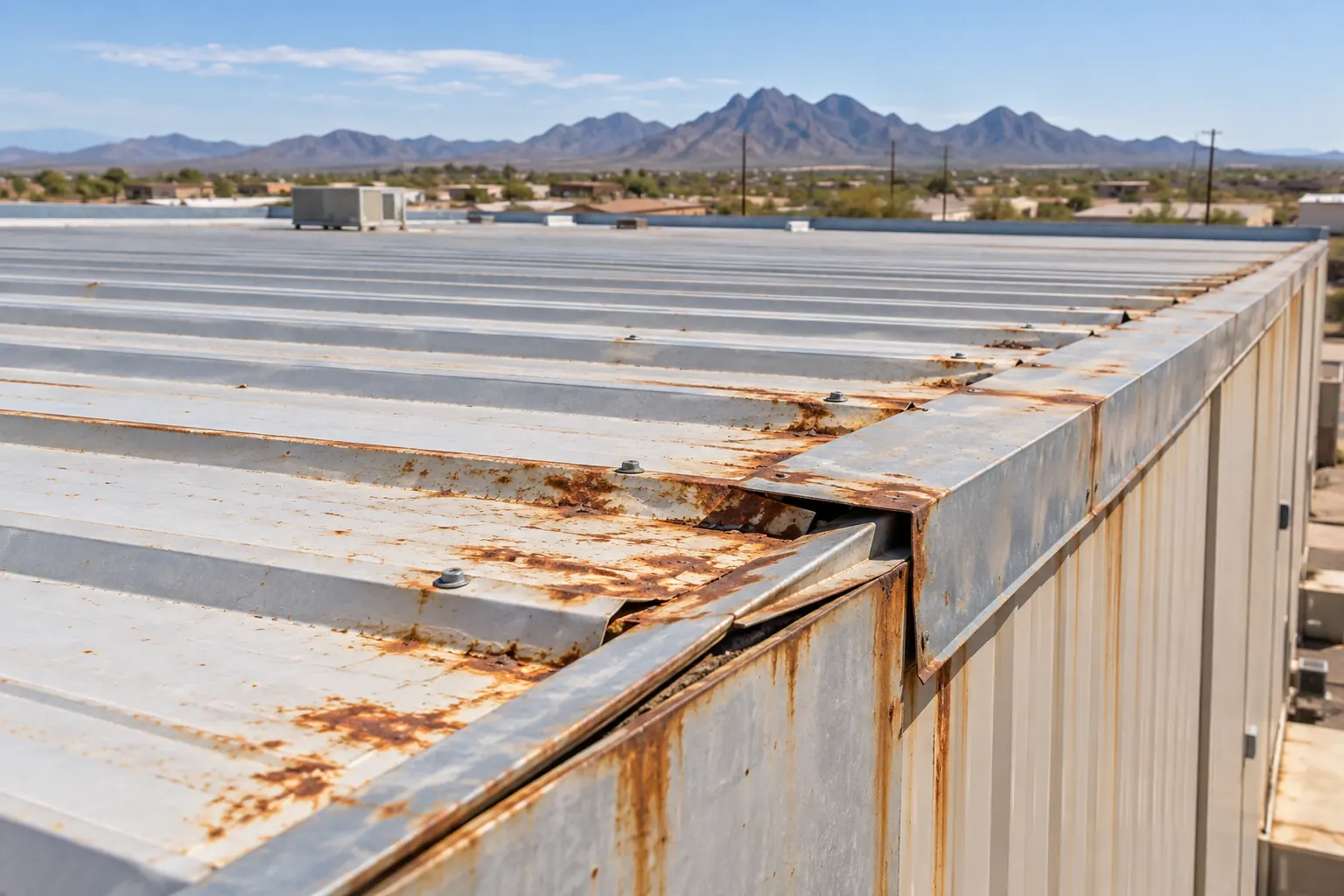
On metal buildings the trace usually ends at a fastener line or end lap, and metal roof repair handles the screws, sealant, and rust.
Commercial metal roof repairWhat to know when water is already showing inside.
Because water moves before it drips. On a low-slope roof it can slip under a lap, run across the top of the insulation, or follow a steel deck flute, then come through a ceiling tile or light fixture some distance away. Finding it means working upslope from the stain and testing one detail above it at a time.
Catch the water, and call soon. A small drip often means the insulation above is already soaking up water, and wet board spreads the damage and adds weight to the deck. Move stock and equipment away, photograph the stain, and note when it drips.
Yes. A controlled water test recreates the leak by wetting one suspect detail at a time while someone watches inside. Moisture meters and core cuts also show where water has been sitting under the membrane, even on a dry day.
Monsoon storms bring wind-driven rain and short, heavy downpours that hit details ordinary rain never reaches. Water blown sideways gets behind loose counterflashing and lifted coping and past ridge caps, and clogged drains back water up over the flashing.
It can, when water travels along deck flutes or across the insulation. It can surface in two or three places, or reappear in a new spot after a ceiling tile is replaced. Tracing each stain back to the roof shows whether they share one entry point or come from separate failures.
Before the roof is opened above a work area, stock, desks, or equipment underneath get moved or covered with plastic sheeting. Wet ceiling tiles are pulled before they fall, and floor areas under the leak stay marked until the repair is done.
The stain itself stays until the ceiling tile or drywall is replaced, but it should stop growing. Mark its edge with a pencil after the repair; if the edge creeps past the mark after the next rain, call so the roof can be checked again.
Tell us where the water shows up and when it drips, and we will plan the trace and the repair.