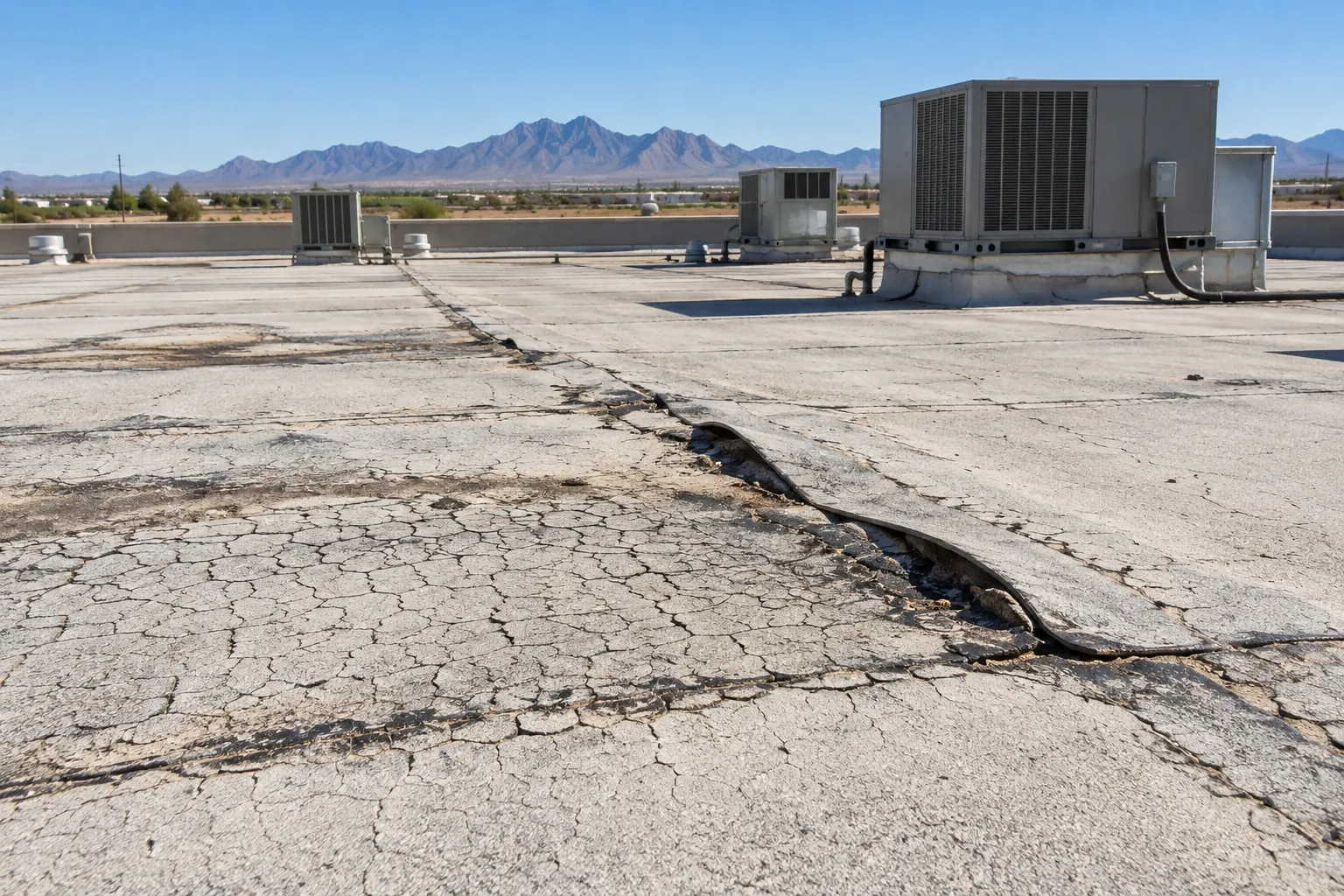
Flat Roof Repair
Most storm damage in Eloy lands on low-slope roofs, and flat roof repair covers the torn membrane, corners, and flashing at the walls.
Flat roof repair after storms
We repair commercial roofs in Eloy after monsoon wind and dust, from lifted edge metal and torn flashing to drains packed with debris along I-10.
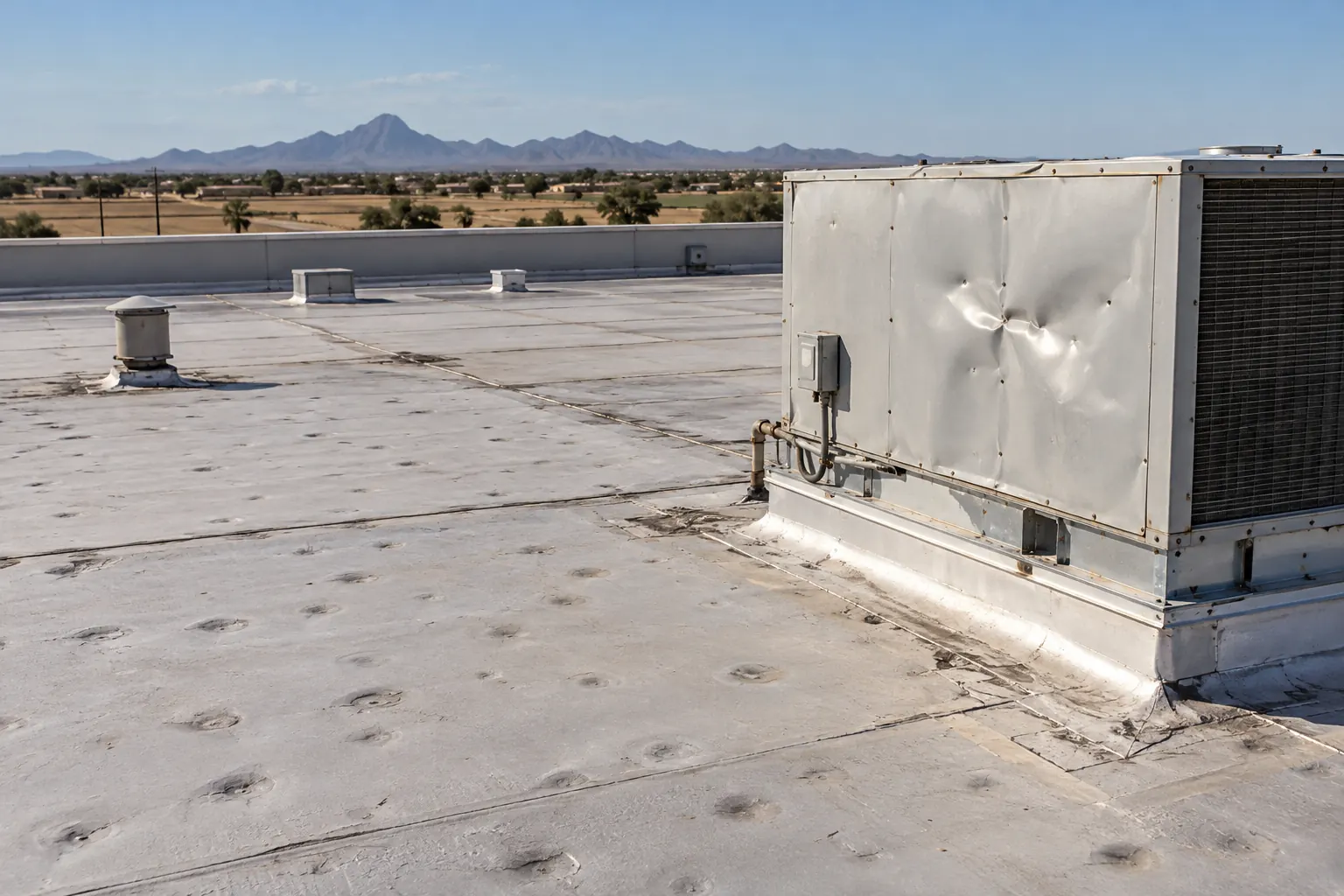
Eloy sits along I-10 and I-8, with wide open ground around many of its commercial buildings. During monsoon season, from June 15 through September 30, downburst winds can top 40 mph and reach roof edges with little to slow them.
After a storm, we check the perimeter first: edge metal, coping, and the flashing behind them, then the drains and scuppers that dust and debris have packed shut.
Wind and blowing dust work from the edges inward, so the perimeter takes most of the damage.
Gusts get under loose edge metal at corners first, peel it back, and expose the membrane edge to wind and rain.
Coping caps with missing fasteners lift and shift, opening joints that let water into the wall top.
Roof corners see the strongest uplift. Loose sheet there balloons in gusts and pulls seams apart.
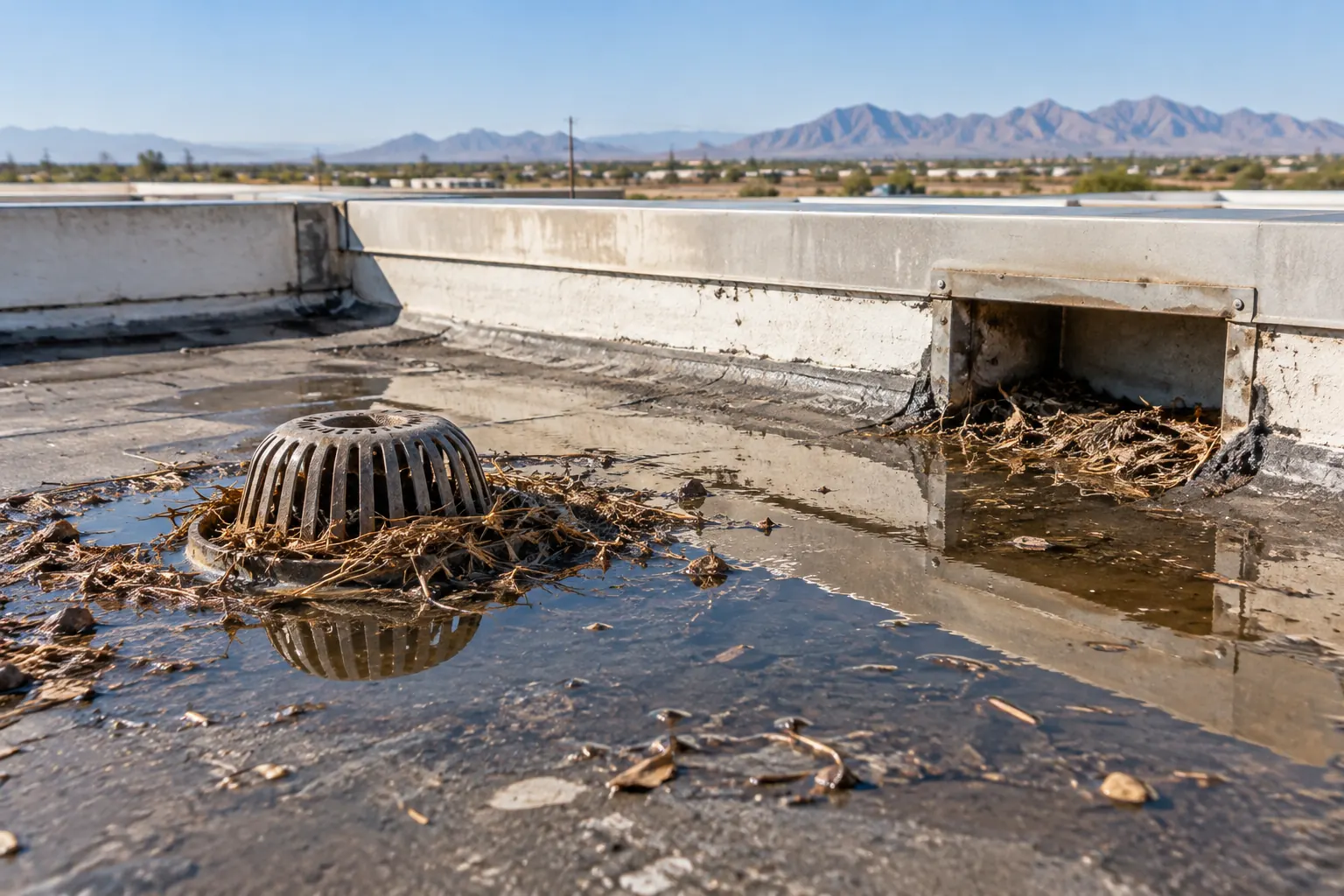
Blown dust and brush pack scupper openings, so storm water backs up against the parapet instead of leaving the roof.
Debris collects on strainers during the dust, and the rain that follows ponds over the drain until it clears.
Storm repairs last when the perimeter is fastened and flashed to take the next gust.
Edge metal with corroded or missing fasteners lifts at the corners and peels back the membrane edge.
Edge metal is reset or replaced and fastened at closer spacing at the corners, with the membrane edge resealed under it.
Wind lifts coping caps that have lost fasteners, opening the joints along the wall top.
Caps are refastened with new cleats and joint covers so the wall top is sealed again.
Dust and brush fill scupper boxes, and storm water ponds against the parapet flashing.
Scuppers are cleared and their flashing checked, so the next storm drains off the edge.
Flying debris and loose sheet tear the membrane in the field near rooftop units.
Tears are cut back to clean membrane and patched with material matched to the roof, then probed.
Storm calls in Eloy land on two kinds of roofs.
Most storm damage in Eloy lands on low-slope roofs, and flat roof repair covers the torn membrane, corners, and flashing at the walls.
Flat roof repair after storms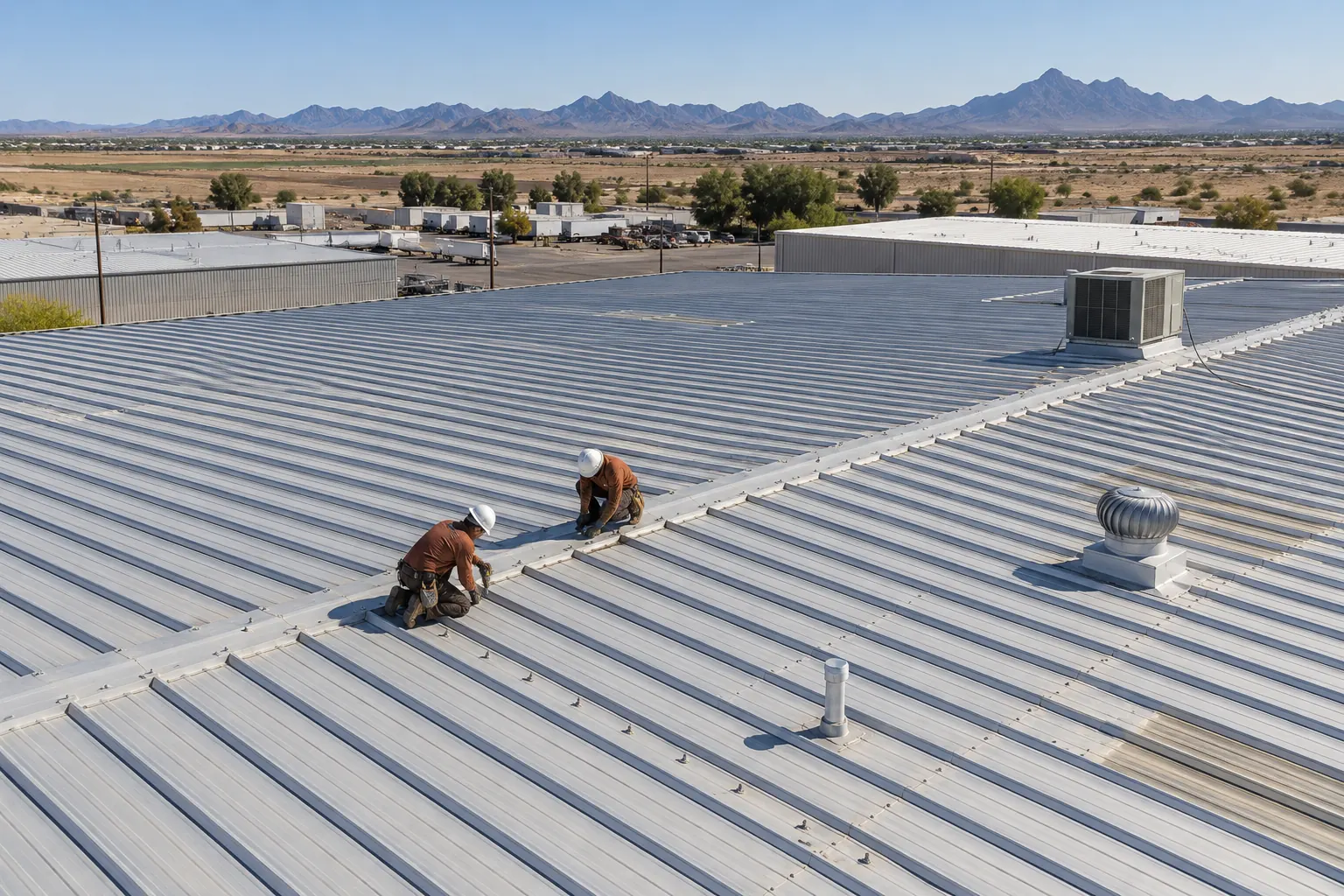
Metal shops and warehouses along I-10 lose trim, ridge caps, and fasteners in gusts, which metal roof repair replaces and seals.
Metal roof repairPhotograph what you can see from the ground, then call. Tell us which edges or drains look wrong so the inspection starts there.
Storm work starts with documentation, then secures the roof before the permanent repair.
We walk the perimeter first, then the field and drains, and photograph each piece of damage where it lies before anything is moved or cleaned up.
On The Roof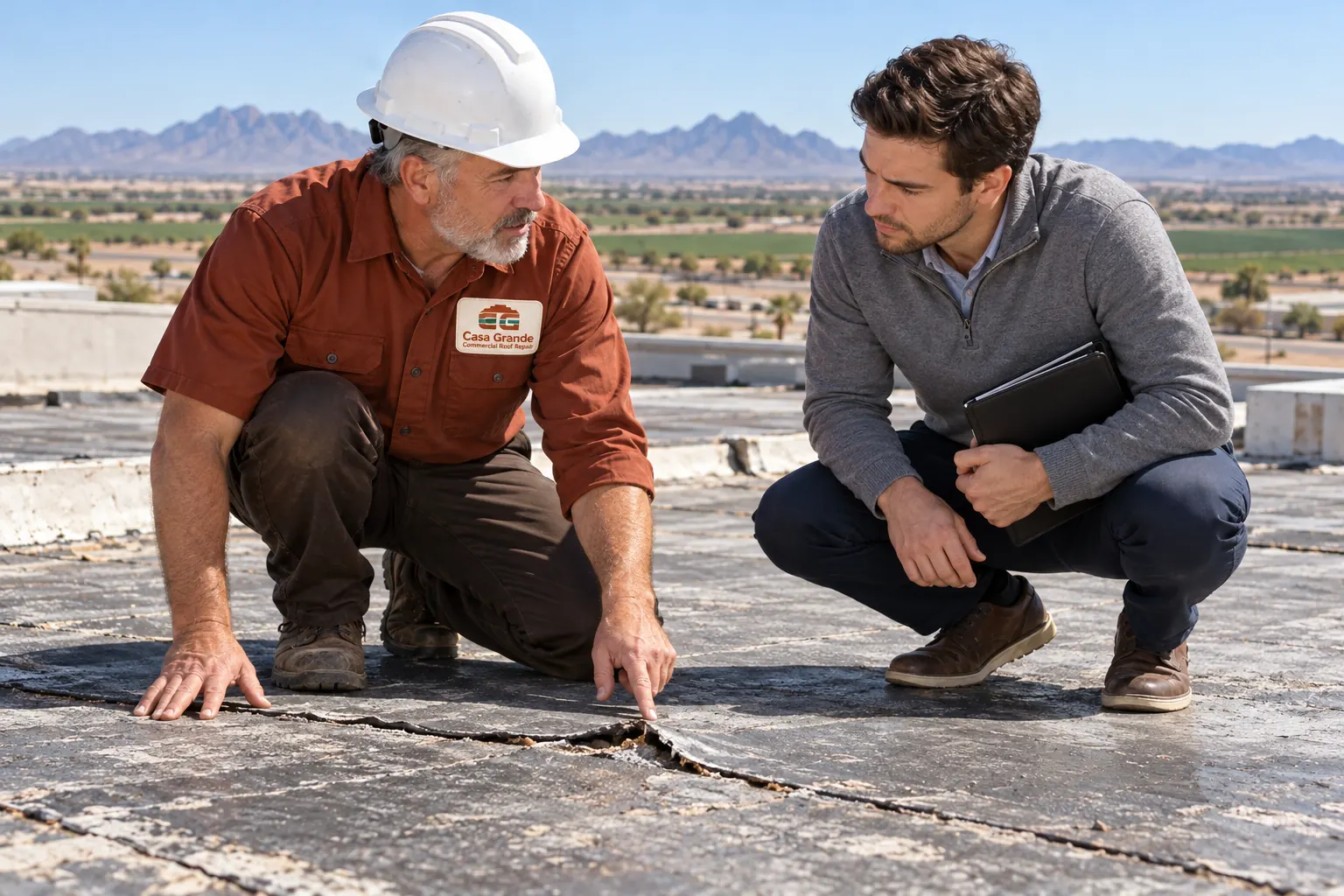
Lifted edges get temporarily fastened and open areas covered, so the next storm cell adds no more water to the building.
On The Roof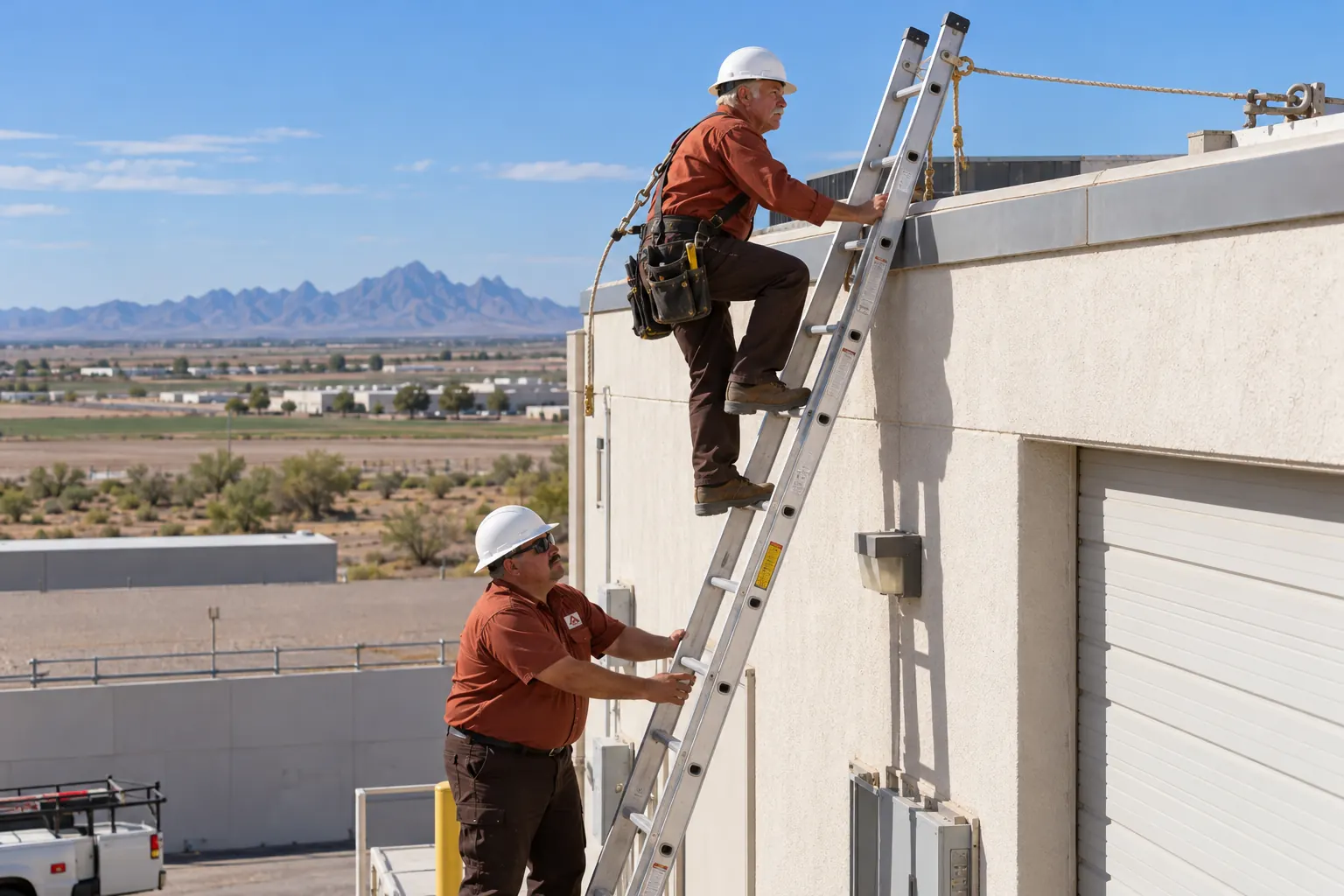
Debris is cleared from every drain and scupper so standing water can leave the roof and the surface can dry for repair.
On The RoofEdge metal and coping are reset or replaced, membrane edges resealed, and torn flashing at walls and curbs rebuilt.
On The RoofYou get dated photos of the roof damage and the repairs, plus receipts for any temporary work, ready for your insurer if you file a claim.
PaperworkEloy sits southeast of Casa Grande on I-10.
West of Eloy, a smaller unincorporated community where leaks often need a stopgap before the permanent fix.
North toward SR 287, where industrial park properties hold several buildings with roofs of different ages.
Northwest along I-10, where all four repair services cover flat, metal, leak, and industrial roofs.
Storm, wind, and permit answers for Eloy properties.
The edges and drains first, because wind and dust hit them hardest. Stay off the roof unless it is safe. Look for lifted edge metal or coping, drains and scuppers packed with debris, torn flashing at curbs and walls, and ponding rings that show water sat longer than usual. Then check inside for new ceiling stains.
Start with photos, before anything is moved. Wide shots place the damage on the roof, and close-ups show torn flashing, lifted seams, dented panels, or bent edge metal. Write down the storm date, photograph stains and wet stock inside, and save receipts for stopgap work. Coverage is the insurer's decision, so ask the adjuster early which records they want.
Strong enough to move roof edges. The National Weather Service notes that monsoon downbursts can top 40 mph, and open ground around many Eloy buildings gives gusts a clear path to the roof perimeter. Edge metal and coping with weak fasteners are the first to lift.
Yes. Blowing dust and debris scour coatings, pack drains and scuppers, and leave grit in seams. The real damage often shows with the next rain, when packed drains pond water over flashing that dust has already worn.
It depends on its condition. Edge metal that is straight and solid can be refastened at closer spacing. Bent, corroded, or torn pieces get replaced, since a damaged edge lifts again in the next gust.
The City of Eloy Building Official administers the city building code. Larger storm repairs and reroofing go through that office, and the city sets the threshold, so we confirm the permit question before the deck is opened.
As soon as it is safe to look. Water that gets in through a lifted edge or torn flashing keeps spreading through the insulation with every storm that follows, so the first dry day after a monsoon storm is the time to call.
Tell us what the storm did to the edges, drains, or flashing, and we will start the inspection at the perimeter.