Flat Roof Repair
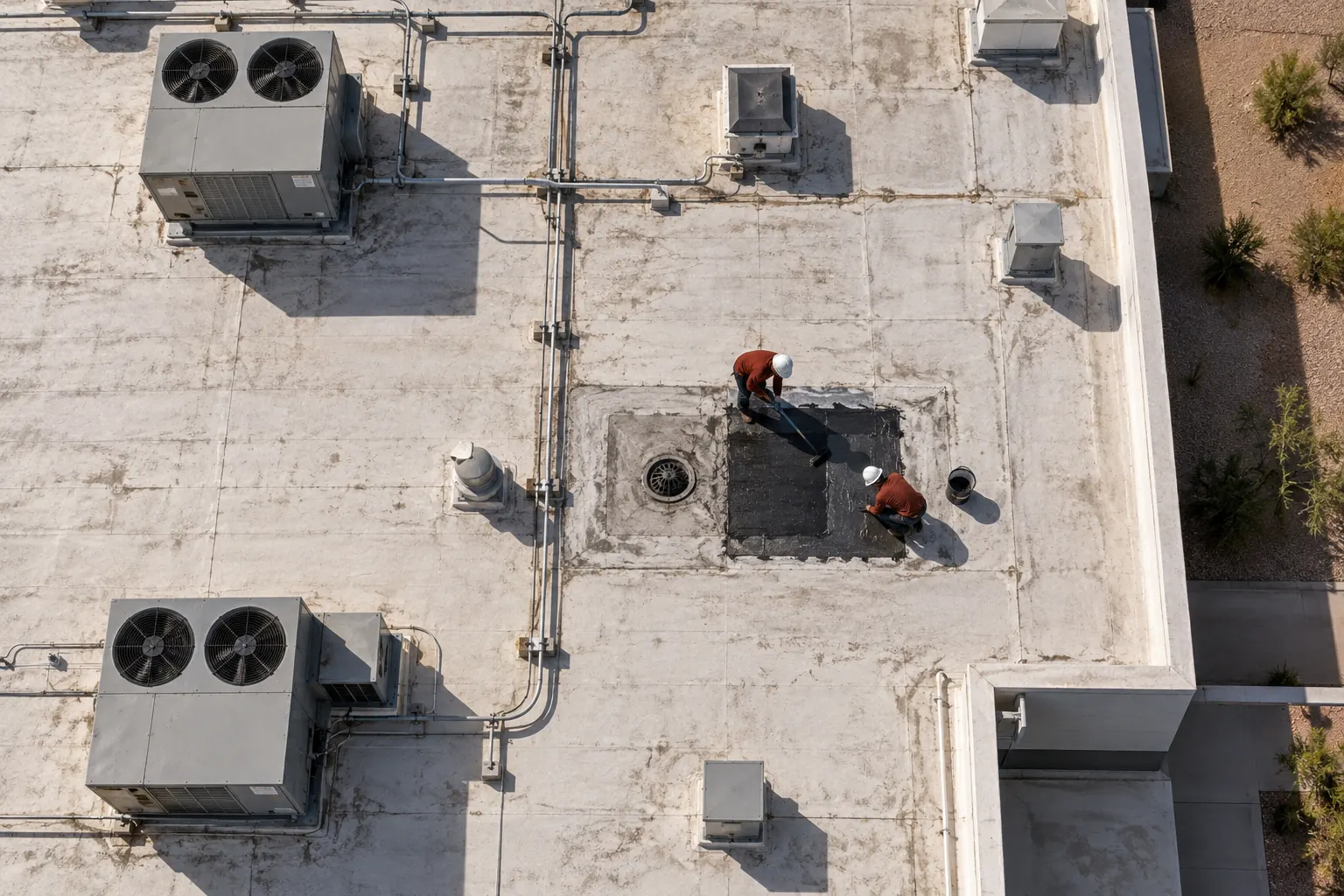
Warehouse and office roofs on Coolidge industrial sites are mostly low-slope membrane, so flat roof repair handles their laps, drains, and wall flashing.
Flat roof repair
We repair commercial roofs in Coolidge, including industrial park sites where several buildings, roof systems, and roof ages sit on one property.
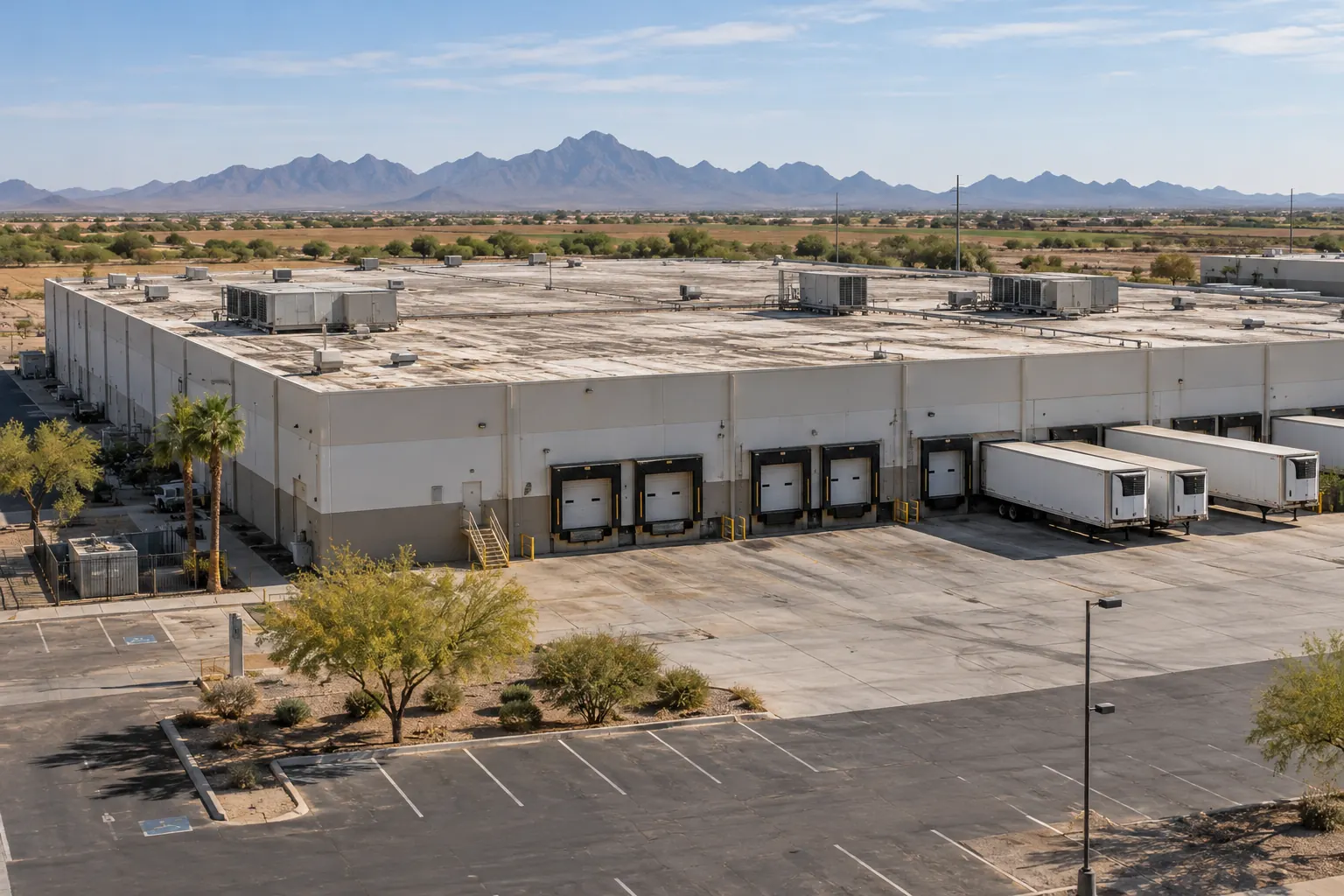
Coolidge has several industrial parks, including the Coolidge Industrial Park, the Union Pacific Railroad Industrial Park, and Randolph Industrial Park. A property in one of them often holds a warehouse, a shop, and an office, each with its own roof.
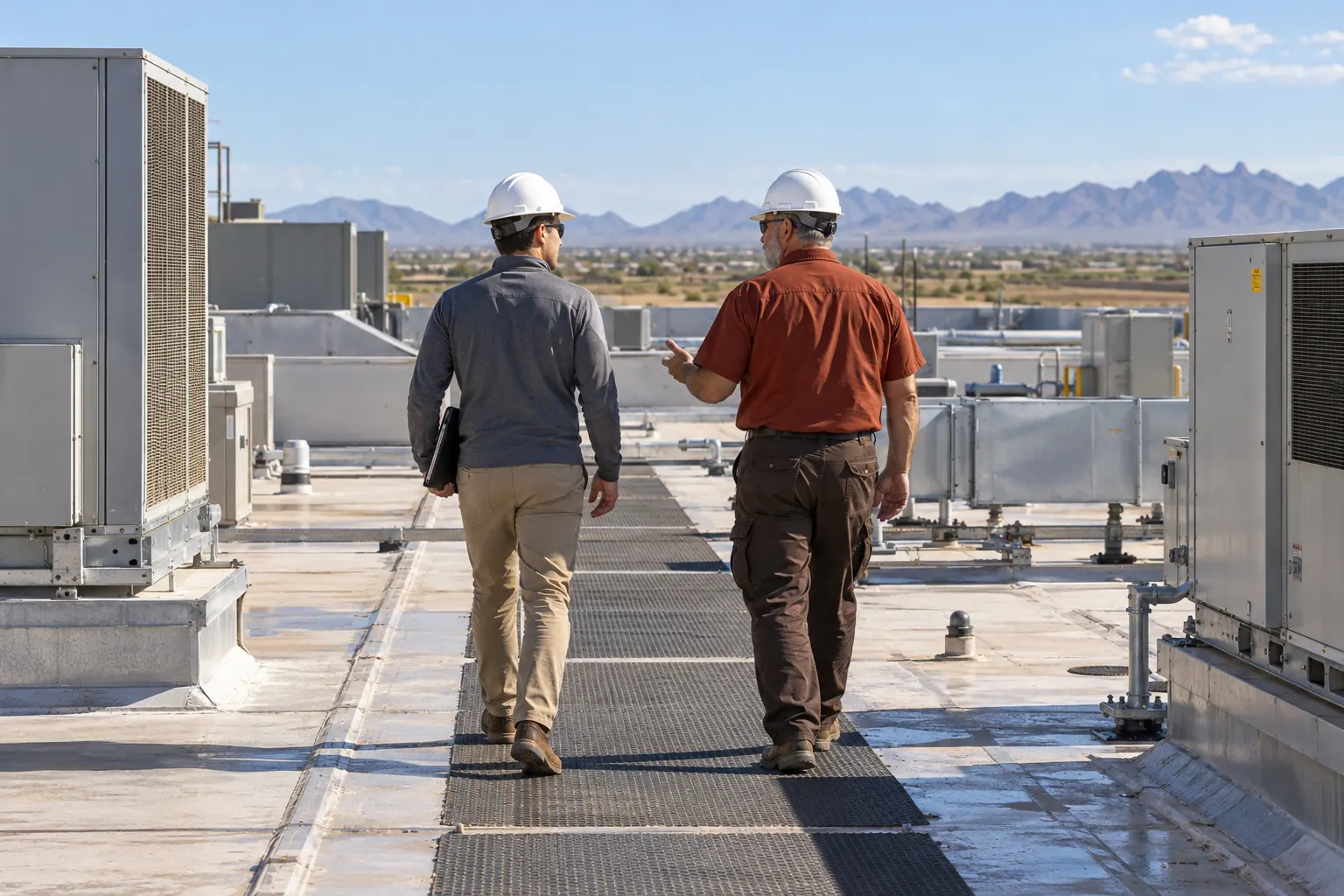
We inspect every roof on the property, then rank the repairs: active leaks over stock first, then failing flashings, then wear that can wait. Each building keeps its own repair log.
Older and newer roofs on the same parcel fail in different places. These five show up most.
The oldest building on a site often has a built-up roof with blisters and cracked surfacing, while newer neighbors have single-ply sheets.
Past repairs made with whatever was on hand leave mastic on TPO or tape on gravel roofs, and those patches fail first.
Where roofs meet at a shared wall or valley, drains and gutters collect debris from both buildings and overflow.
Flashing where a canopy or lower roof ties into the main wall leaks into the dock area and is easy to miss from the ground.
Each building carries its own units, and curb flashing condition varies with how often each one gets serviced.
Repairs on a multi-building site last longer when each roof gets the method made for its own system.
Mastic smeared over a TPO seam or tape stuck to gravel surfacing lets go within a season.
Old patches are removed, and each roof gets a repair matched to its membrane: welds, tape, or plies.
Debris from two roofs collects at a shared drain or gutter, and water backs up under the flashing.
The shared drain is cleared and reflashed, and its strainer goes on the maintenance list for both buildings.
Money goes to a visible stain on one building while a bigger leak spreads over stock next door.
Ranking every roof on one visit puts the first repair where water is doing the most damage.
The oldest roof on the parcel gets the least attention until its flashings fail all at once.
Each building gets its own spring and fall check, logged separately, so worn details on the oldest roof get caught early.
Two services cover most multi-building properties in Coolidge.
Warehouse and office roofs on Coolidge industrial sites are mostly low-slope membrane, so flat roof repair handles their laps, drains, and wall flashing.
Flat roof repair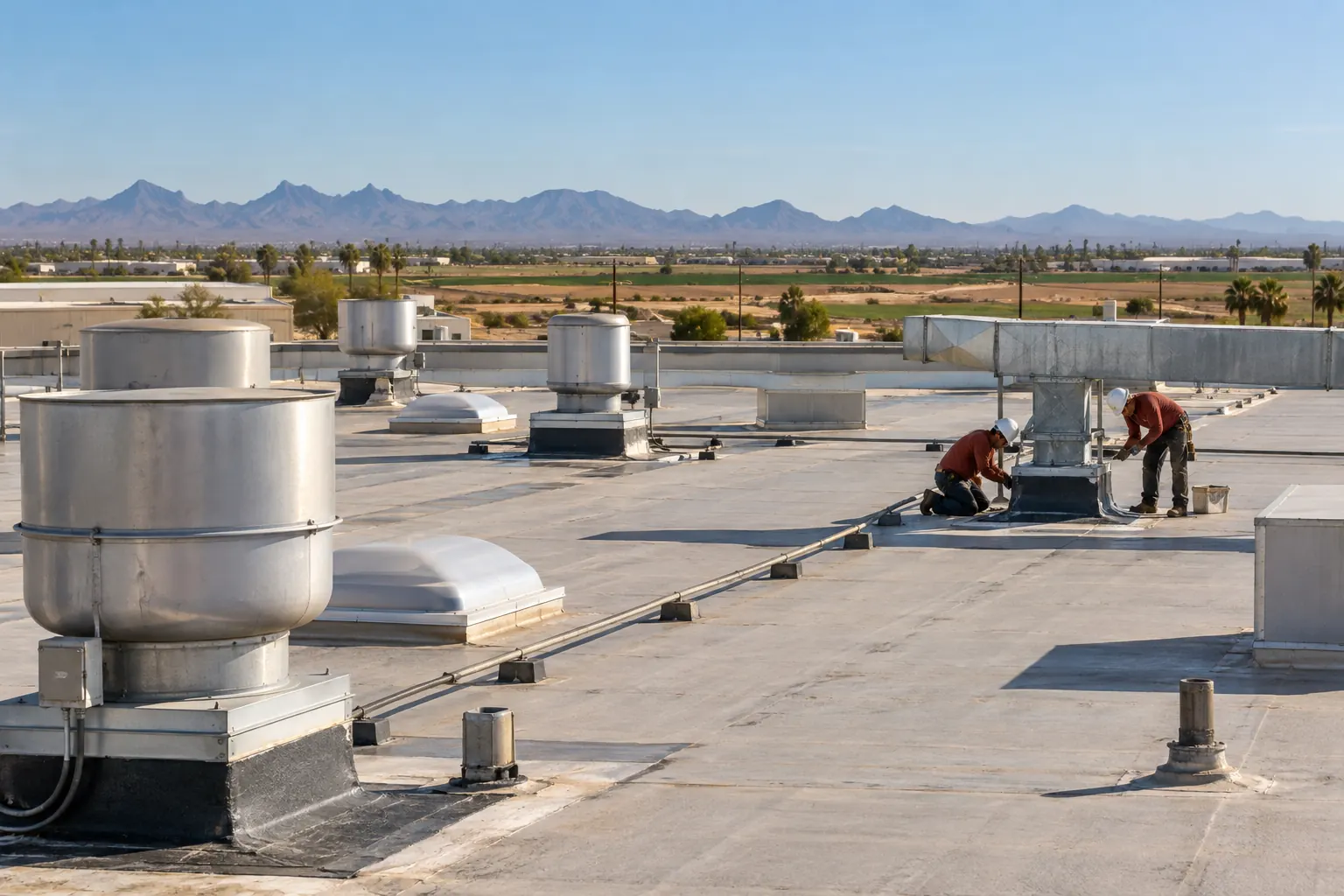
Plants in the industrial parks carry exhaust and process equipment, and industrial roof repair works in zones around it.
Industrial roof repairCall with the number of buildings and which ones are leaking. One inspection visit can cover every roof on the property.
One visit, every roof, and a repair order that puts the worst leaks first.
We inspect each building on the parcel in turn, starting with the one that is leaking, and note the roof system, drains, curbs, and flashing on every roof.
On The Roof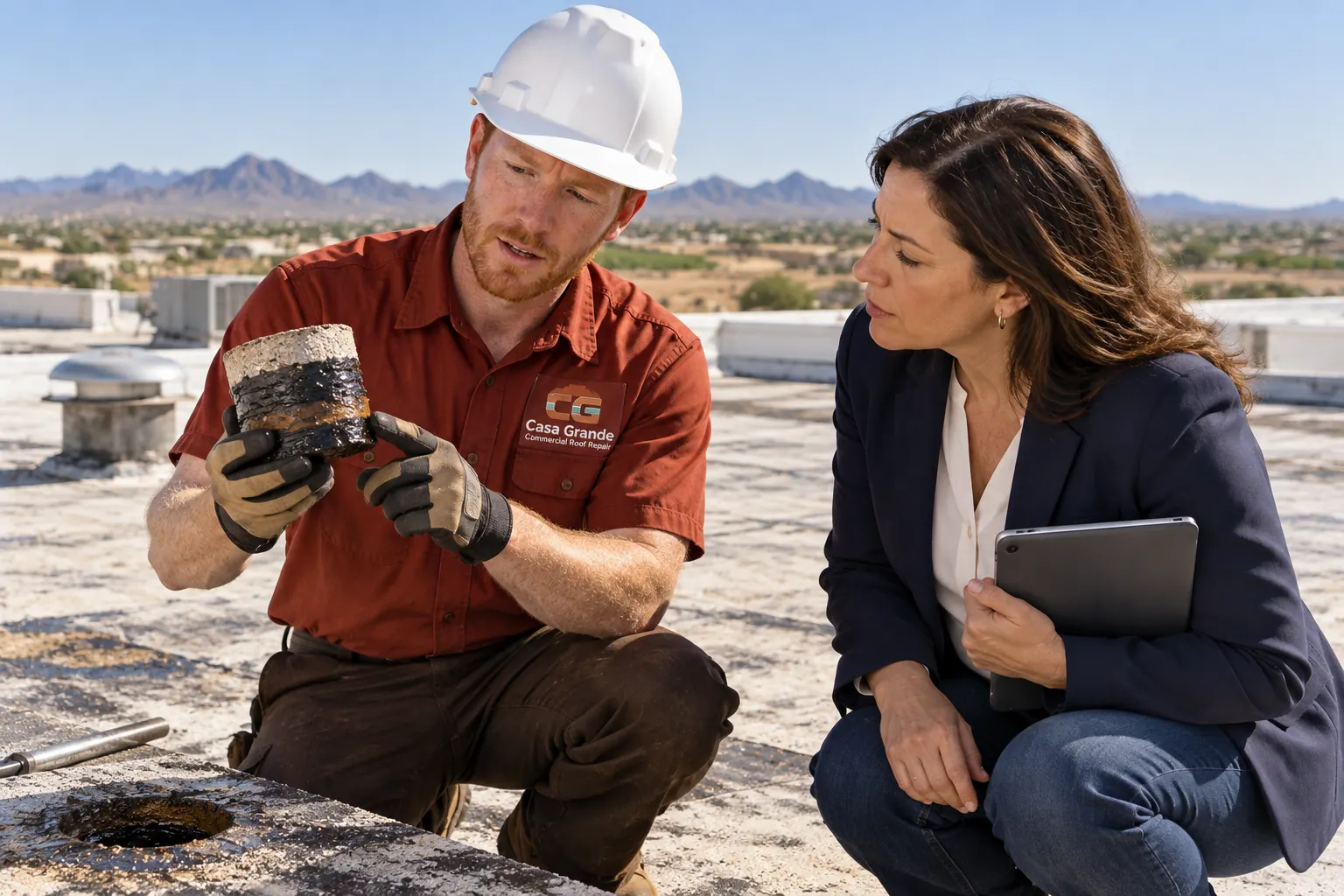
Leaks over stock, equipment, or offices come first, then failing flashings, then worn areas that can wait. You get the ranked list before any work begins.
PaperworkMaterials for every roof are loaded and staged in one trip, with access planned around docks, rail sidings, and truck traffic on the property.
At The Building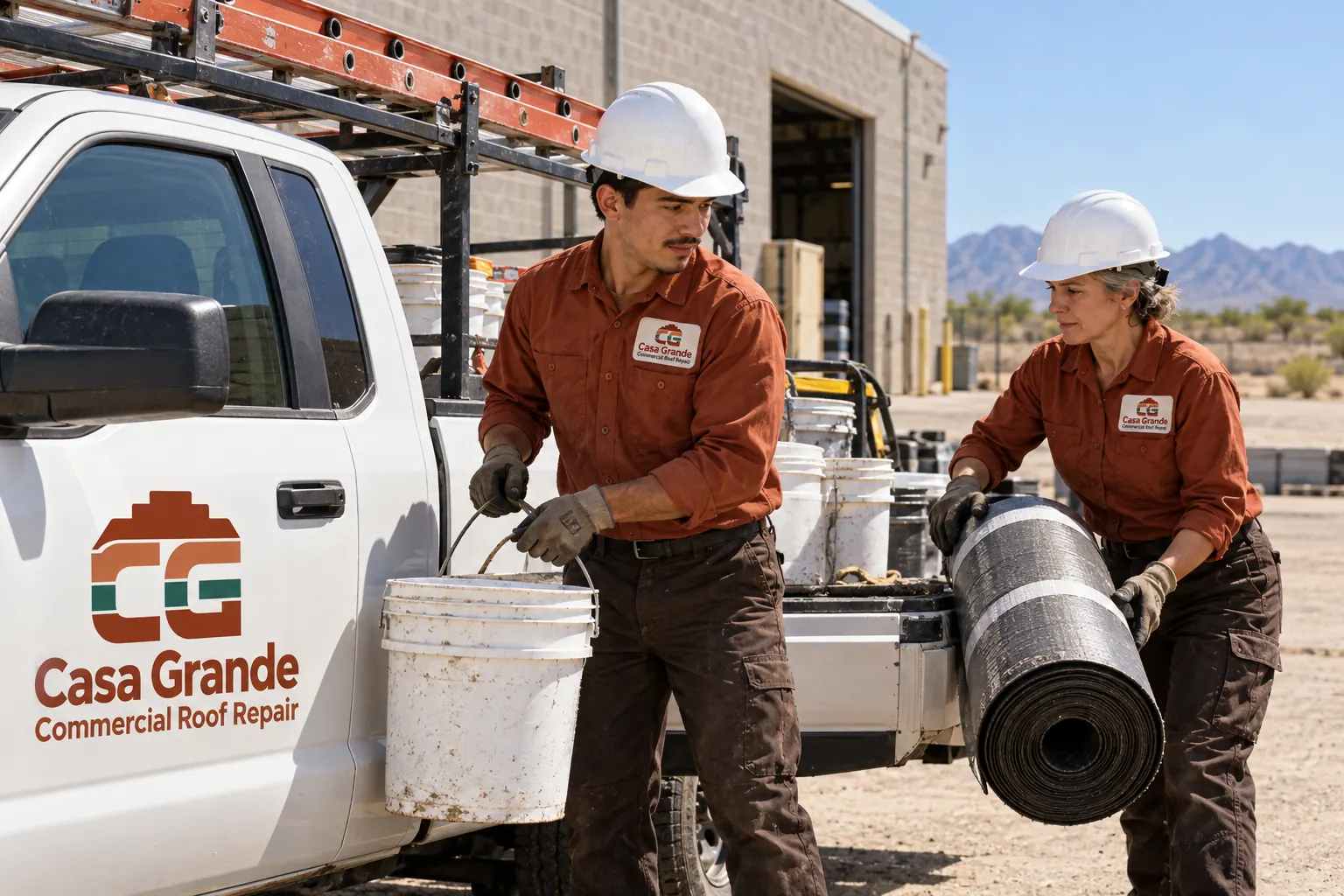
Each roof gets repairs made for its own system, and one building is finished before work moves to the next.
On The RoofPhotos and notes are filed by building, so the next inspection on the property starts from a clear record of what was repaired on each roof.
PaperworkCoolidge sits on SR 287 between Casa Grande and Florence.
East on SR 287, with older downtown buildings where repairs keep visible materials the same.
South of Coolidge toward I-10, where storm damage to edge metal and drains is the common call.
West on SR 287, where flat, metal, leak, and industrial roof repairs cover the city itself.
Answers for owners and managers of Coolidge properties.
Two visits a year catch most problems: one in spring before monsoon season and one in fall after it. Each visit clears drains and scuppers, reseals pitch pans and boots, checks seams and parapet flashing, and looks for damage left by HVAC service. On a multi-building site, keep a photo log per building so repeat failures stand out.
Yes, and it is the best way to rank repairs. Walking all the roofs together shows which leak is doing the most damage and lets materials for every roof be staged in one trip. Larger parcels can take a full day, so plan access to each building ahead of time.
Neither by default. The repair order follows the damage: a leak over stock or equipment comes first, whatever the roof's age. An older roof that needs constant patching gets flagged for replacement planning while its active leaks are fixed.
They shape access and staging. Lifts and material drops are kept clear of rail spurs, dock doors, and truck lanes, and work near the docks is timed around shipping hours. Tell us when trucks or rail cars usually load so the schedule avoids them.
The City of Coolidge building department handles permits inside city limits. Larger repairs and reroofing go through that office, and the threshold is the city's to set, so we confirm before any decking or large membrane areas are replaced.
Each roof needs its own. A built-up roof, a TPO roof, and a metal shop roof take different materials and methods, and using one patch product across all of them is a common reason repairs on multi-building sites fail early.
A simple folder per building: roof type, age if known, past repairs with dates, warranty paperwork, and photos from each inspection. With that record, a leak call can be matched to the building's history before anyone climbs up.
Tell us how many buildings are on the property and which ones are leaking, and we will plan one visit for all of them.