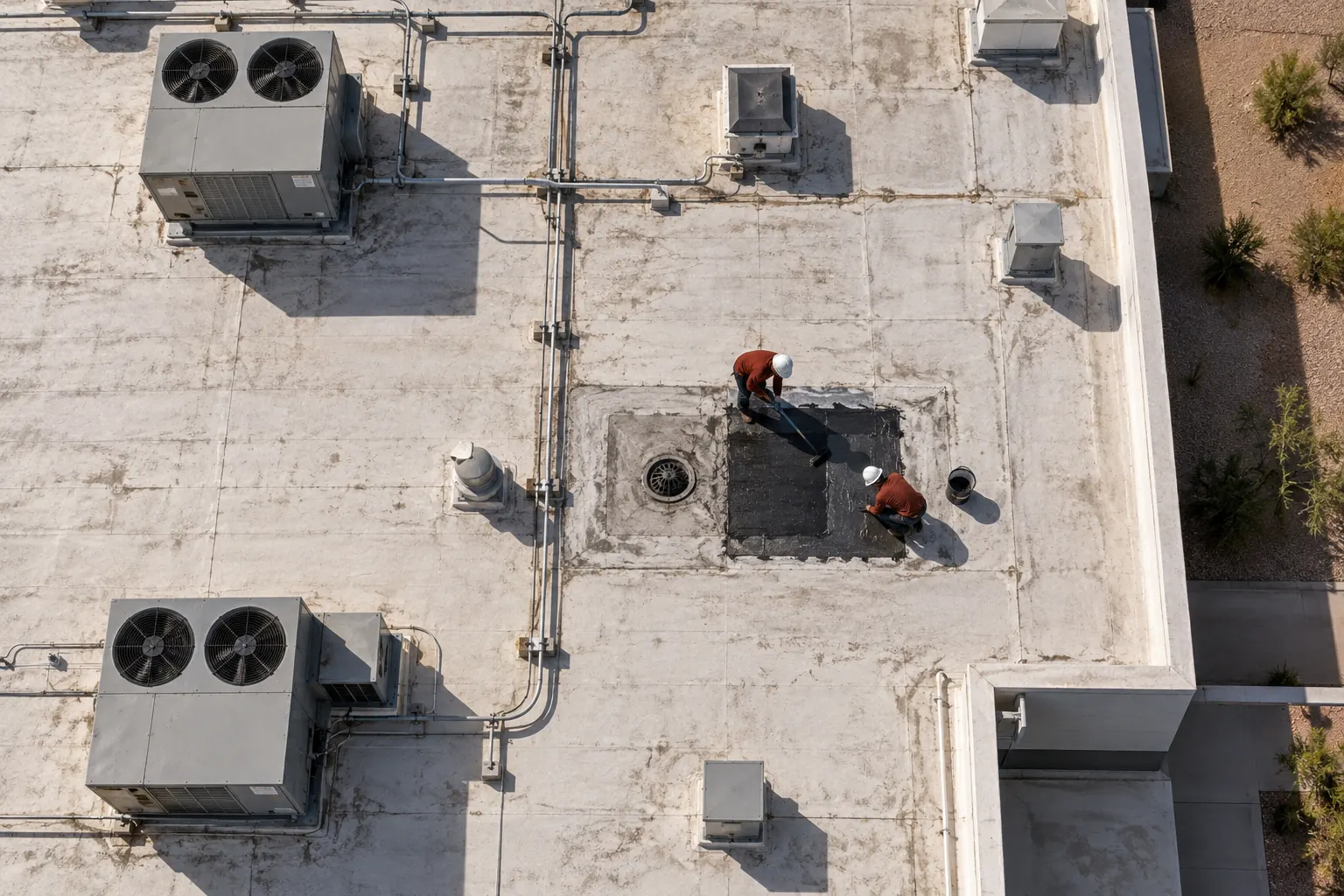
Flat Roof Repair
Behind the parapets, most older Florence buildings have flat membrane or built-up roofs, and flat roof repair handles their laps and wall flashing.
Flat roof repair behind parapets
We repair commercial roofs in Florence, including older buildings in the historic district, where visible parapet caps, awnings, and metal stay the same after the work.
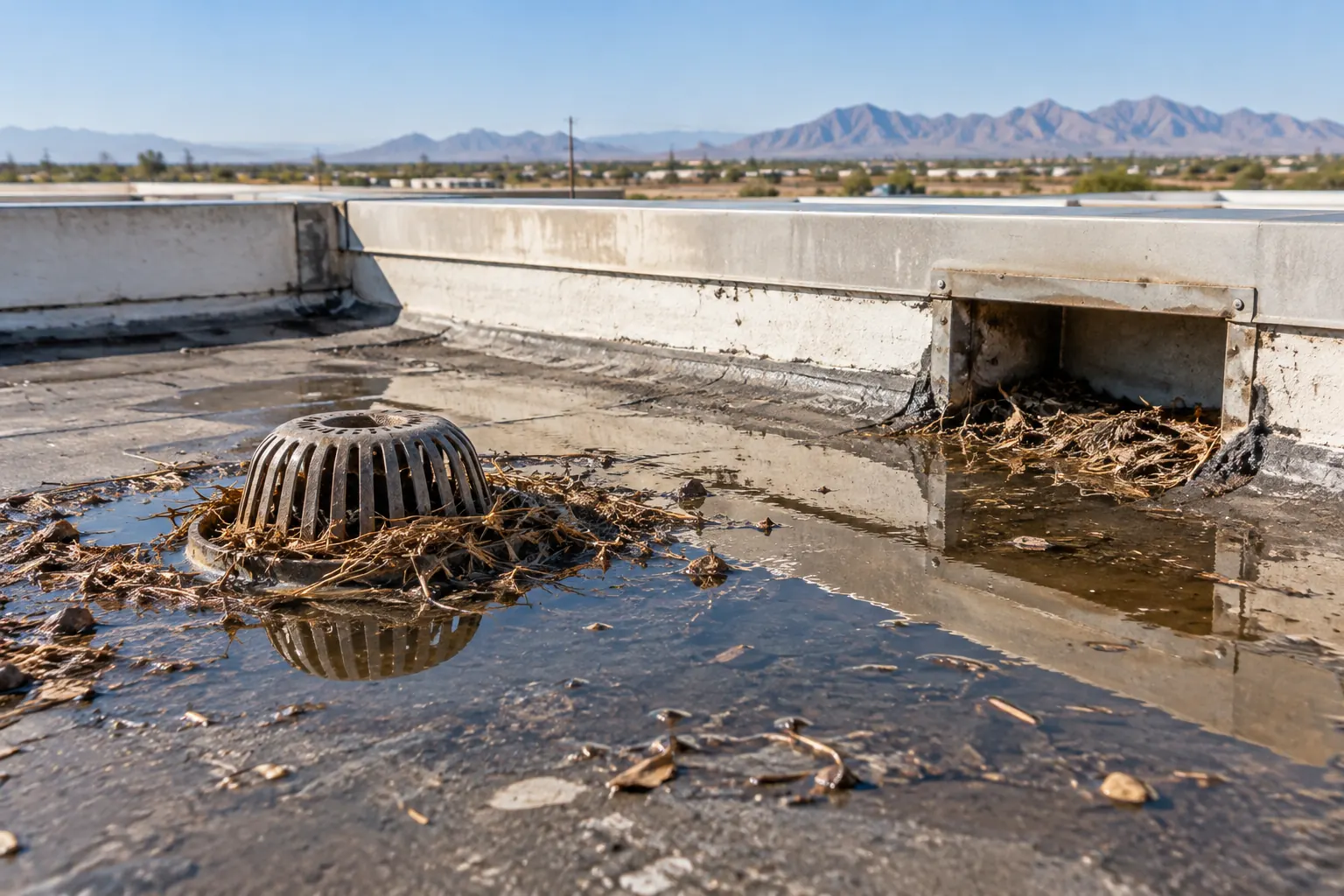
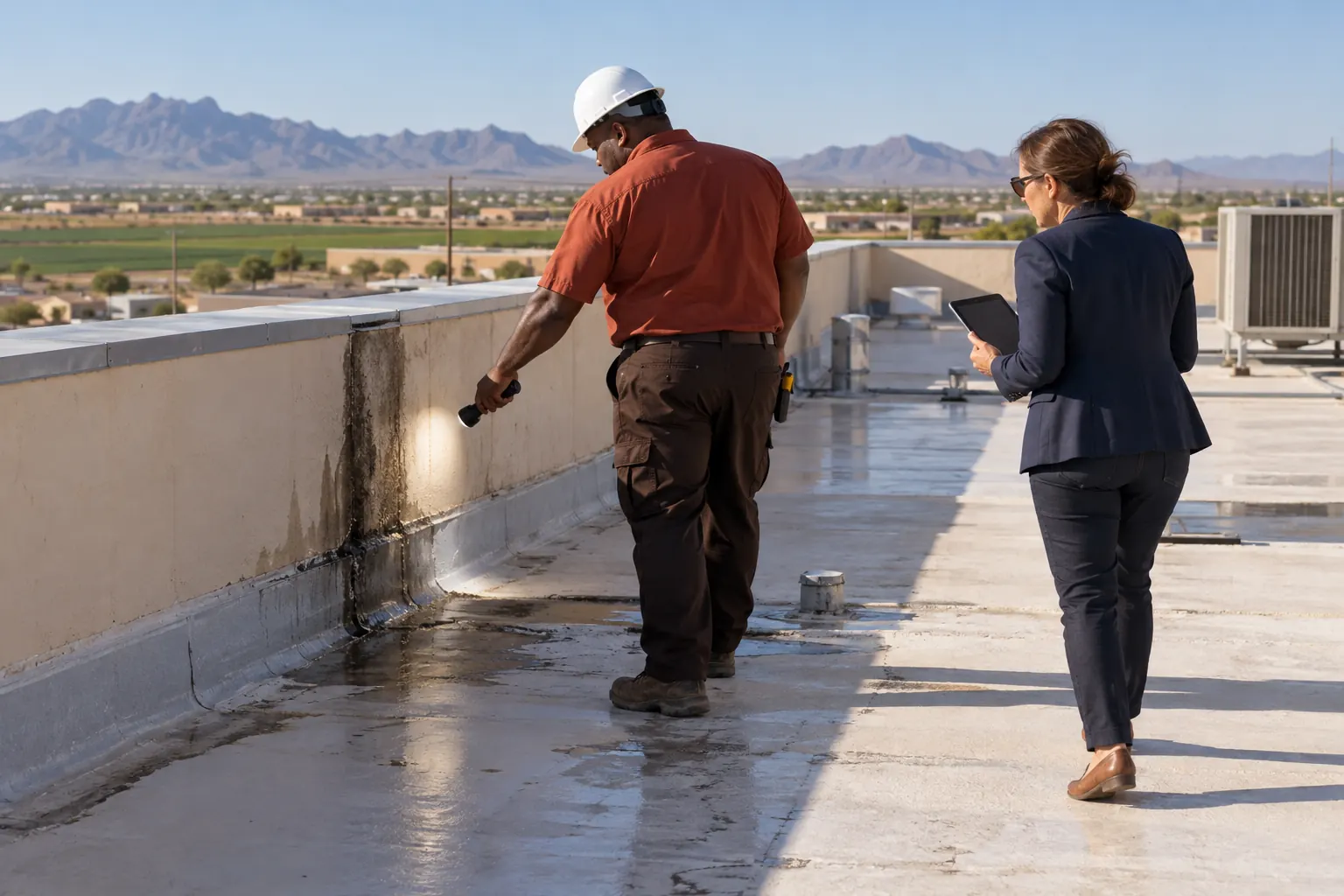
In Florence, the Historic District Advisory Commission reviews work on buildings in the historic district under guidelines that cover roofs. Parapet caps, awnings, and visible metal panels draw the closest look from the street.
Most of a flat roof behind a parapet is out of sight, but the edges are not. Repairs at caps, scuppers, and metal trim match the existing material and profile, and anything visible gets checked with the town first.
Older masonry buildings with parapets leak at the same handful of details, most of them at the wall.
Caps over older masonry parapets open at their joints, and water soaks into the wall top below.
Scuppers cut through thick masonry walls hold debris, and their flashing cracks where it meets the brick.
Old base flashing pulls away from rough masonry, letting water run down behind it into the building.
Flat roofs behind parapets often have low spots near the walls where water sits after storms.
Units added to older buildings sit on curbs flashed later, often with mismatched materials that fail first.
On an older building, a repair lasts longer when it respects the wall it ties into.
Joint covers fail on parapet caps, and water soaks the masonry under the cap.
Caps are reset and joints resealed in the same profile and finish, so the street view stays the same.
Base flashing loses its bond to uneven brick and pulls away from the wall.
The wall face is prepared and the flashing re-adhered and finished under a reglet or counterflashing.
Flashing around a through-wall scupper cracks where it meets the masonry opening.
The scupper is cleared and reflashed, and its outlet metal is matched to what the street already sees.
Low spots beside parapets hold water against the base flashing after every storm.
Repairs extend past the wet area, and the nearest scupper or drain is cleared so water has a path off the roof.
Two services handle most older Florence buildings.
Behind the parapets, most older Florence buildings have flat membrane or built-up roofs, and flat roof repair handles their laps and wall flashing.
Flat roof repair behind parapets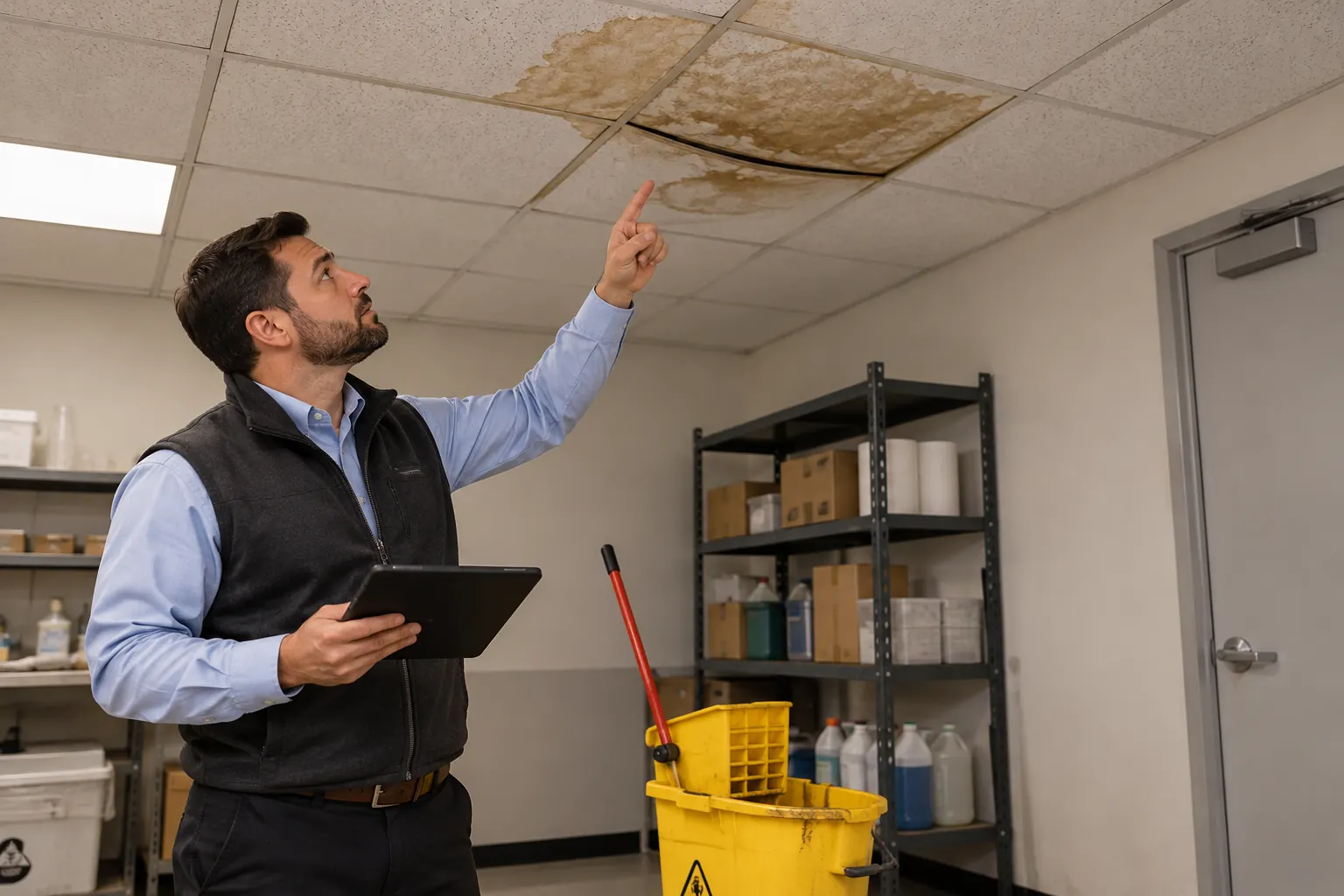
Water in older masonry can travel along the wall before it shows inside, so leak tracing confirms the entry point first.
Leak tracing and repairThat usually points to a parapet cap or base flashing. Call and tell us which wall and whether the building is in the historic district.
Repairs on district buildings add a check with the town before any visible detail changes.
We inspect the roof behind the parapets, then the caps, scuppers, and trim seen from the street, photographing each visible detail before work starts.
On The Roof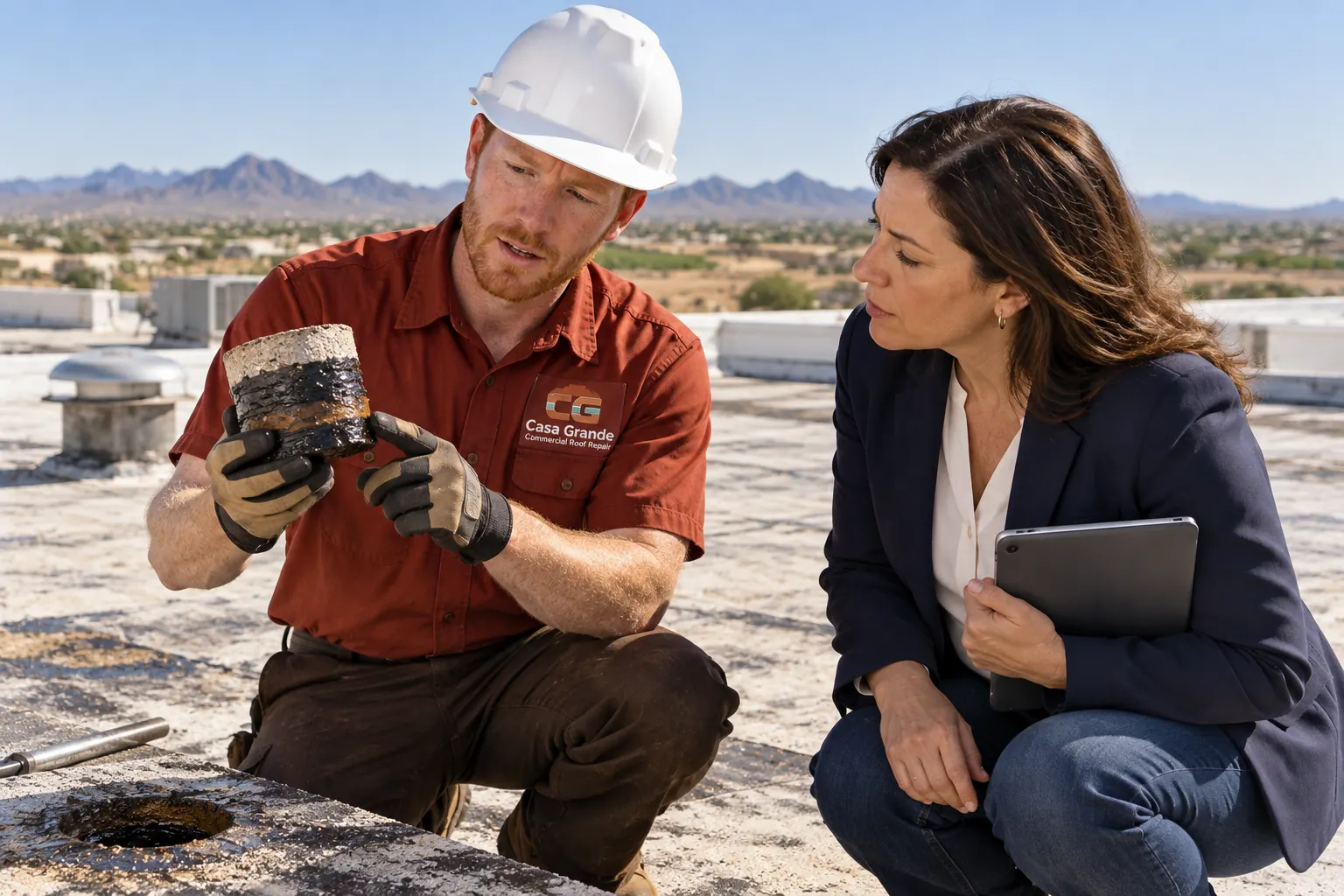
Anything that changes what the street sees, such as a cap profile, trim color, or metal panel, gets checked with the Town of Florence before work begins.
Paperwork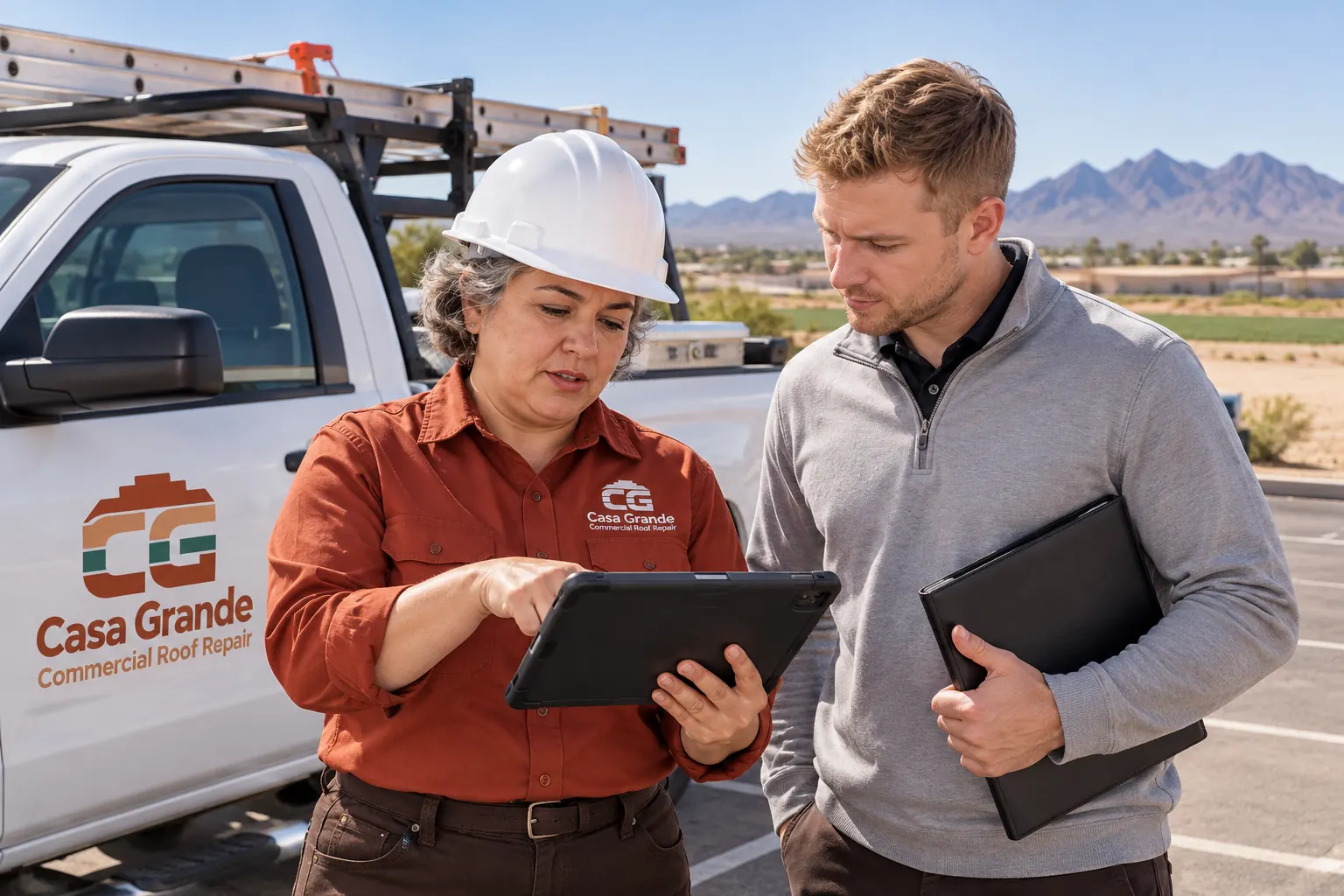
Work at the parapet walls uses methods that spare older brick and mortar, and debris is kept off the sidewalk and storefront below.
At The BuildingCaps, flashing, and trim are repaired in the existing profile and finish, and hidden roof areas get repairs matched to their membrane.
On The RoofPhotos of each visible roof detail before and after the repair go into the building file for future work and any district review.
PaperworkFlorence sits at the east end of SR 287 from Casa Grande.
West on SR 287, with industrial park sites where several buildings share one property and one inspection visit.
Farther west on SR 287, covering flat, metal, leak, and industrial roof repairs across the city.
Southwest toward I-10, where monsoon wind lifts edge metal and blowing dust packs the drains.
Historic district and older building answers for Florence.
Yes, for designated landmarks and for buildings inside the historic district. The Town of Florence Historic District Advisory Commission reviews district work under guidelines that cover roofs, and parapet caps, awnings, and visible metal panels get the closest attention. Flat roof areas hidden behind parapets draw less notice, but check with the town before changing anything the street can see.
The Town of Florence Community Development department handles permits. Larger repairs and reroofing go through that office, and buildings in the historic district can also need commission review, so both questions get answered before work starts.
Usually, where they stay out of sight. A modern membrane on a flat roof hidden behind parapets is common. Visible parts, such as caps, trim, and metal panels, are where matching the existing material and look matters most.
Water that gets in at a parapet cap or the top of the wall soaks down through the masonry and shows up inside along the wall, sometimes a floor below. Open cap joints, cracked mortar at the wall top, and loose base flashing are the usual causes.
Material goes up away from entrances, debris is lowered or chuted into a container instead of dropped, and the sidewalk area under the work gets marked off. Work at the street edge is timed around business hours where the town and tenants allow.
On a district building, check with the town first, since visible changes draw the closest review. The simplest path is matching what is there now, and any change gets settled with the town before materials are ordered.
They help a lot on older buildings. Photos of the caps, trim, and visible metal before work give the town and future roofers a clear record of the original look, and they help match materials if a detail needs repair again years later.
Tell us whether the building is in the historic district and where water shows up, and we will plan the inspection.